
 English
 Arabic
 English
 French
 German
Management System Compliance: CMS Update for 2026
A Compliance Management System (CMS) is the backbone of any organization aiming to stay compliant with ever-evolving regulations, industry standards, and internal policies. In the world of cybersecurity, ensuring that all systems, processes, and controls align with compliance regulations isn’t just a necessity; it’s a strategic advantage.
In this article, we’ll examine what a compliance management system is, how it works, and its key benefits for organizations, especially those in industries like financial services, healthcare, and cybersecurity.
Whether you’re looking to implement a management system compliance in your organization or simply need to understand its impact, we’ll guide you through the process, using real-world examples, practical steps, and insights into how compliance systems help businesses mitigate risk and ensure operational security.
What is a Compliance Management System?
A Compliance Management System (CMS) is a structured framework that helps organizations comply with regulations, standards, and internal policies. It’s an integrated system designed to manage compliance across multiple departments, ensuring that every part of the organization adheres to legal and ethical standards.
At its core, a CMS isn’t just about following the rules; it’s about creating an efficient system that actively identifies risks, automates compliance activities, and provides corrective actions to avoid legal issues or penalties. For example, in a banking system, a compliance management system ensures that all transactions meet financial regulations like AML (Anti-Money Laundering) requirements and KYC (Know Your Customer) protocols.
A compliance management system example could involve a platform that automates risk assessments and tracks changes in laws, providing real-time insights into areas that need immediate attention. This integration not only helps prevent violations but also improves overall operational efficiency, ensuring businesses stay on top of evolving regulatory requirements.
For industries like healthcare or finance, a CMS might also need to meet specific regulatory frameworks, such as ISO 37301, which outlines the requirements for an effective CMS in any organization.
RELATED: SSID Wireless Internet: What It Is and How to Use It Safely in 2026
The Three Pillars of Compliance in Cybersecurity
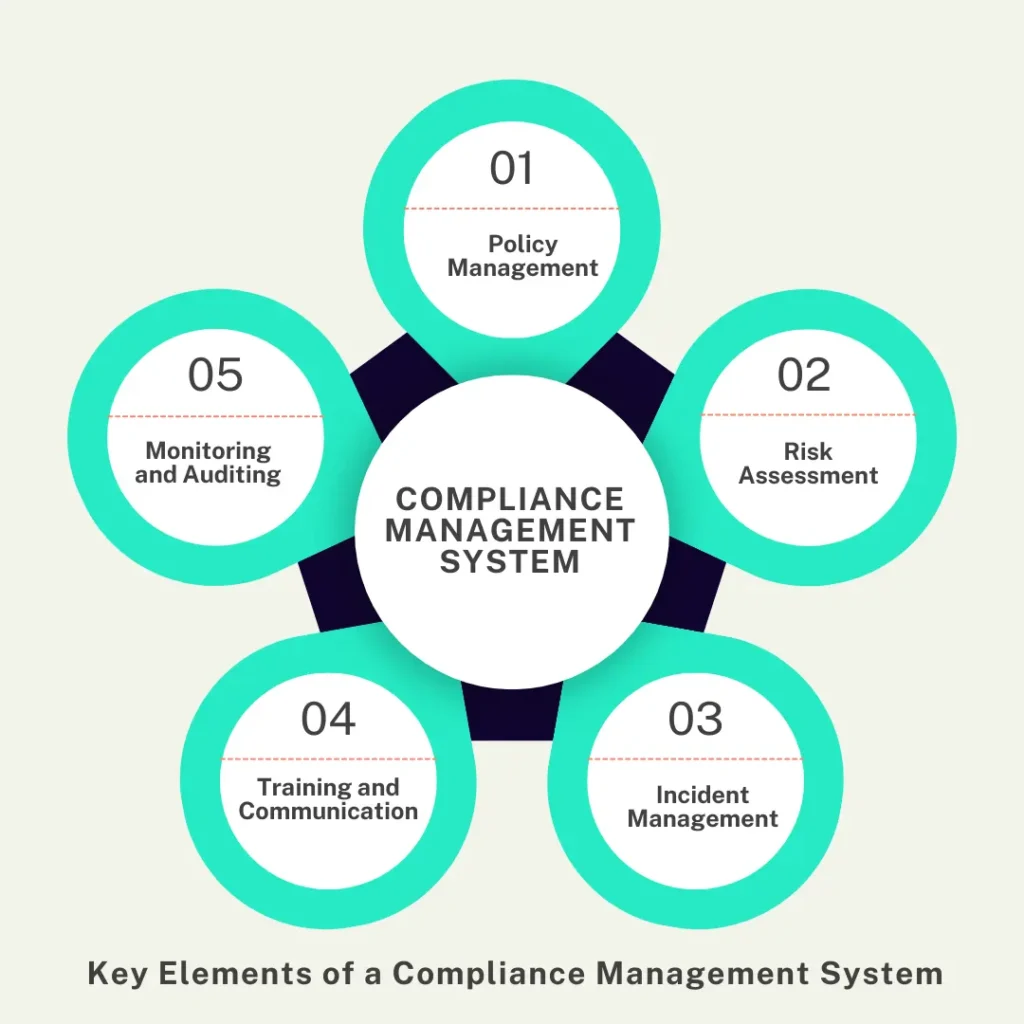
A strong Compliance Management System (CMS) relies on three core pillars to ensure that organizations can meet regulatory requirements while protecting sensitive data. In the context of cybersecurity, these pillars help safeguard business operations against potential threats and maintain compliance with industry-specific regulations. Let’s break down these pillars:
1. Policy Management
This pillar involves the creation and enforcement of clear compliance policies and procedures. These policies set the foundation for how an organization approaches regulatory requirements and cybersecurity practices. In a CMS, policy management ensures that all employees understand and follow the same standards, from senior executives down to entry-level staff.
For example, a bank might have anti-money laundering (AML) policies enforced through a compliance management system that flags suspicious transactions, ensuring they align with national and international financial regulations.
2. Risk Assessment
Identifying, evaluating, and mitigating risks is a vital component of any compliance management system. In cybersecurity, risk assessments help organizations pinpoint vulnerabilities and proactively address them before they lead to compliance failures or security breaches. Risk assessments should be continuous, adapting to new threats as they arise and ensuring the organization stays ahead of any potential regulatory risks.
For instance, data privacy laws like the GDPR require businesses to assess the risks involved in processing personal data, ensuring compliance through proper controls and monitoring.
3. Monitoring and Reporting
Compliance monitoring ensures that all policies and procedures are being followed correctly. This is critical in cybersecurity, where constant surveillance of systems and networks helps identify compliance gaps and potential security risks in real-time. Monitoring tools track activities, detect non-compliant behavior, and provide alerts when there’s a need for corrective action.
Reporting mechanisms within the CMS allow organizations to document compliance efforts and showcase compliance status to regulatory bodies, auditors, and stakeholders. This ensures that organizations can demonstrate their adherence to laws and internal policies, which is crucial in passing compliance audits.
Together, these three pillars, policy management, risk assessment, and monitoring & reporting—form the foundation for a solid compliance management system that protects organizations from legal risks, ensures data security, and boosts operational efficiency.
The Role of Compliance Management in Different Industries
A Compliance Management System (CMS) plays a crucial role across various industries, ensuring that businesses meet regulatory requirements and protect sensitive data. Whether it’s banks, healthcare providers, or technology companies, the CMS framework adapts to the unique needs and risks of each industry. Let’s explore how compliance management systems are tailored for different sectors, focusing on banks and HR departments.
Compliance Management for Banks
In the banking industry, where regulations are stringent and non-compliance can result in severe financial penalties, a compliance management system is indispensable. Banks handle vast amounts of sensitive customer data, making it crucial for them to stay compliant with regulations like AML (Anti-Money Laundering), KYC (Know Your Customer), and Basel III for financial risk management.
A compliance management system for banks automates processes like risk assessments, transaction monitoring, and regulatory reporting. It ensures that all transactions meet legal requirements, helping banks detect and report suspicious activities to authorities. For example, the CMS can automatically flag transactions that meet AML risk profiles, ensuring quick action is taken to mitigate potential legal violations.
Additionally, the system can track regulatory changes in real-time, ensuring that banks stay ahead of new compliance requirements, reducing the risk of penalties.
Compliance Management in HR
In human resources, the primary focus of a compliance management system is to ensure that the organization adheres to labor laws, employee privacy regulations, and other compliance-related issues like workplace safety. Compliance management in HR also ensures that employee data is protected in accordance with GDPR, HIPAA (for healthcare employees), and EEOC (Equal Employment Opportunity Commission) regulations.
A CMS helps HR departments manage sensitive employee data, ensure non-discriminatory practices in hiring, and maintain a safe working environment. It also plays a critical role in training and certification to ensure that HR staff remain knowledgeable about current labor laws and regulations. For instance, a company might use a CMS to monitor mandatory sexual harassment training and ensure compliance with OSHA (Occupational Safety and Health Administration) standards.
How Enterprises Ensure Compliance Across Multiple Departments
In large organizations, compliance management doesn’t stop at a single department. Enterprise-wide compliance systems ensure that all departments, from finance to HR to IT, are following the same regulatory guidelines and standards. This requires seamless integration of compliance solutions across systems to prevent gaps in compliance, whether it’s related to data privacy, risk management, or employee rights.
A well-integrated compliance management system ensures real-time compliance visibility across all departments, allowing for consistent risk mitigation and compliance reporting across the entire organization. For example, the CMS can help track how different departments comply with ISO 37301 or SOX (Sarbanes-Oxley Act) and ensure the audit trail is clear for internal and external auditors.
READ MORE: Security Vulnerability Assessment: Definition, Process, Tools, and Real Examples
Benefits of a Compliance Management Program
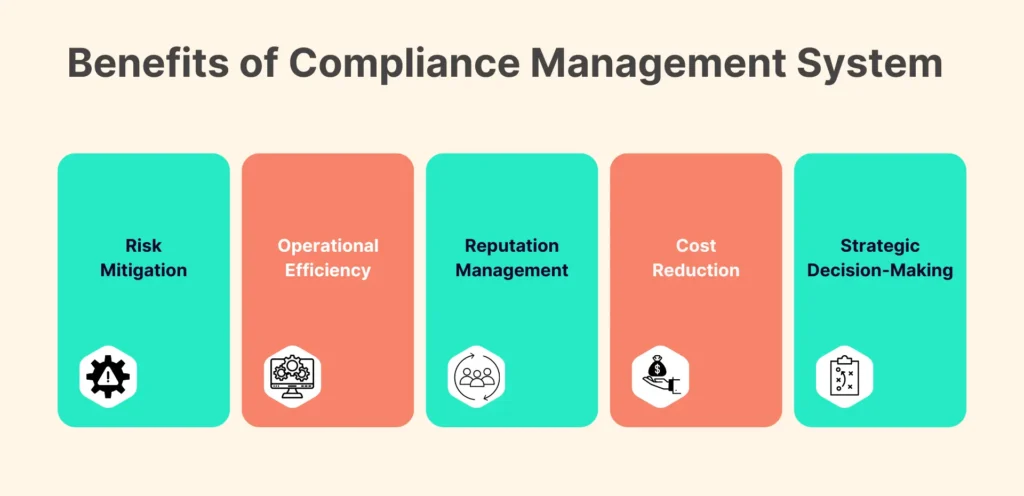
Implementing an effective Compliance Management System (CMS) brings a host of benefits that go beyond mere compliance with regulations. For organizations, particularly in cybersecurity, these systems ensure that operations run smoothly, reduce risk, and build trust with stakeholders. Let’s look at the key benefits of having a robust compliance program.
1. Risk Mitigation
The most obvious and critical benefit of a compliance management program is risk reduction. By ensuring compliance with regulations, businesses significantly decrease the likelihood of facing legal penalties, fines, or even lawsuits.
For instance, financial institutions with a CMS can proactively address anti-money laundering (AML) risks, fraud prevention, and data breaches, ensuring that regulatory requirements are met. Early detection of potential non-compliance issues allows organizations to take corrective actions before they escalate into costly problems.
2. Efficiency and Streamlining Operations
A compliance management system eliminates the need for manual compliance tracking, automating processes such as audit logging, compliance reporting, and risk assessments. This streamlining frees up valuable time for employees to focus on more strategic tasks, thus increasing overall organizational efficiency.
By using compliance software that integrates with enterprise systems, companies can automate repetitive compliance activities, reduce errors, and ensure that critical deadlines are met on time. This level of automation helps companies stay ahead of regulatory changes without the added burden of manual updates.
3. Enhanced Trust and Reputation
Trust is increasingly becoming a competitive edge. Customers and business partners are more likely to engage with companies that have a demonstrated commitment to compliance management. Whether it’s meeting data privacy laws like GDPR or complying with financial regulations, businesses that maintain high standards of compliance show their stakeholders that they value security, ethics, and accountability.
For example, businesses that invest in cybersecurity compliance are often perceived as more trustworthy and reliable by customers, particularly in industries where data protection is paramount, such as healthcare and finance.
4. Clearer Decision-Making and Reporting
A compliance management system enables clearer, more informed decision-making. By providing real-time insights into compliance status and risk levels, these systems help leaders make data-driven decisions regarding resources, investments, and potential risk areas.
With a CMS in place, compliance reporting becomes more straightforward. Organizations can easily pull reports to assess their compliance posture, track corrective actions, and present these findings to regulators or external auditors. This level of transparency builds credibility and ensures the organization is always prepared for inspections or audits.
5. Scalability
As organizations grow, so does the complexity of their compliance needs. A well-designed compliance management system ensures that businesses can scale their compliance efforts as they expand into new markets, add new departments, or adopt new technologies. The system can be easily customized and adapted to meet the growing compliance requirements of a global business.
For example, a company that begins with a local compliance program can scale its CMS to handle international regulations as it expands into new regions, ensuring compliance with international standards like ISO 37301 and GDPR.
SEE ALSO: What Is a QR Code? Uses, Risks, and Safety Tips
Integrating Compliance Solutions with Enterprise Systems
Integrating a Compliance Management System (CMS) with an organization’s existing enterprise systems is crucial for ensuring smooth, continuous compliance and real-time monitoring across all departments. This integration enables organizations to centralize their compliance efforts, providing a unified view of compliance activities across various functions like HR, IT, finance, and operations.
How Compliance Solutions Integrate with Enterprise Systems
A compliance management system needs to be seamlessly integrated with enterprise resource planning (ERP) systems, customer relationship management (CRM) tools, HR software, and other essential business systems. By doing so, organizations can ensure that compliance tasks are automatically triggered as part of regular business operations, reducing manual effort and mitigating risks associated with human error.
For example, a CMS integrated with an HR system can automate the tracking of employee compliance with data privacy regulations, ensuring that employee data is securely stored and managed in compliance with laws like GDPR or CCPA. Similarly, a CMS linked to a finance system can automatically flag transactions that may violate anti-money laundering (AML) regulations.
How to Integrate Compliance Across Portfolio Systems
For organizations with diverse portfolios or operating in multiple jurisdictions, integrating compliance systems across multiple portfolio systems is essential for managing compliance at scale. When businesses expand into new regions, they often encounter unique regulatory requirements. A unified compliance solution allows organizations to manage these diverse regulatory environments from one central platform.
For example, a global enterprise might use a CMS to ensure that all regional offices adhere to their specific legal frameworks, such as ISO 37301 for compliance management or industry-specific regulations like HIPAA for healthcare or SOX for financial services. Integration of the CMS with the portfolio systems enables automated reporting and real-time monitoring, ensuring that compliance gaps are quickly identified and addressed.
The Role of Single Sign-On (SSO) in Compliance Systems
Another important integration feature is the use of Single Sign-On (SSO), which simplifies the user access process while maintaining strict compliance standards. By using SSO with a compliance management system, organizations can streamline user access control across multiple systems, ensuring that compliance roles are assigned accurately and without friction.
For example, if a team member’s role in the finance department changes, the system will automatically update their access to sensitive financial data and compliance reports, ensuring that the user only has access to the necessary information based on their compliance responsibilities.
MORE: Managed Network Services: What Professionals Need to Know in 2026
Real-World Example: How a Cybersecurity CMS Saved a Company
One of the most compelling reasons to implement a Compliance Management System (CMS) is the potential to avoid catastrophic data breaches and mitigate compliance risks. A real-world example can shed light on how cybersecurity compliance and regulatory adherence play a critical role in safeguarding both the organization and its customers.
Case Study: A Financial Institution Avoids a Major Data Breach
In 2025, a large financial institution faced a serious risk of non-compliance with data privacy laws after a third-party vendor mishandled sensitive customer data. The CMS in place, which was integrated with their cybersecurity systems, automatically flagged the vendor’s system for potential security flaws and regulatory gaps, alerting the compliance team.
Thanks to the real-time monitoring capabilities of the CMS, the compliance team was able to act immediately, conducting an internal audit to assess the severity of the issue. Within hours, the institution’s cybersecurity team had patched vulnerabilities, and the compliance department ensured the vendor updated their security protocols to align with GDPR and CCPA standards.
Not only did this proactive approach prevent a potential data breach, but it also ensured that the institution remained compliant with international data protection laws, avoiding potential fines that could have reached millions of dollars.
Benefits Realized from the CMS Implementation
- Early Detection: The real-time alerts provided by the CMS helped the organization detect risks before they escalated into costly issues.
- Cost Avoidance: By addressing the potential compliance violation early, the company avoided substantial fines from regulators.
- Operational Efficiency: The automated system streamlined compliance monitoring, reducing the manual effort involved in tracking regulatory requirements.
- Enhanced Trust: Customers remained confident in the institution’s ability to safeguard their data, boosting overall brand reputation.
This case study highlights how a well-integrated compliance management system can proactively protect an organization from significant risks, including financial penalties, reputational damage, and legal trouble, while maintaining robust cybersecurity standards.
Conclusion
A well-implemented Compliance Management System (CMS) not only helps organizations meet regulatory requirements but also plays a pivotal role in strengthening cybersecurity. By automating processes, streamlining compliance activities, and ensuring real-time monitoring, a CMS enables businesses to proactively address risks before they become costly problems.
In the world of cybersecurity, where data breaches and regulatory violations can have catastrophic consequences, a compliance management system provides the framework to safeguard sensitive information and ensure continuous operational security.
By integrating compliance systems into enterprise-wide operations and aligning them with cybersecurity best practices, organizations can protect both their data and their reputation. As the regulatory landscape continues to evolve, adapting your CMS to meet new compliance standards will remain essential for maintaining both compliance and cybersecurity resilience.
To stay ahead of potential compliance violations and cybersecurity threats, implementing a robust compliance management program should be a top priority for organizations across industries.
Ready to take your compliance management knowledge to the next level and integrate it with real-world cybersecurity practices?
At ExcelMindCyber Institute, we don’t just teach you how to navigate regulations or understand compliance management systems. We show you how to implement and optimize them in real-time environments, ensuring that cybersecurity and regulatory requirements work together seamlessly.
In our 90-day program, you’ll gain hands-on experience, develop the skills needed to handle compliance management and cybersecurity challenges, and learn exactly what companies are looking for in top-tier GRC and cybersecurity professionals.
If you’re serious about mastering compliance and securing a high-paying career in cybersecurity, this is where your journey starts.
Don’t just learn about compliance, integrate it into your cybersecurity career and start earning today.
FAQ
What are the 5 C’s of Compliance?
The 5 C’s of Compliance represent the key principles organizations should focus on to ensure they adhere to regulations and maintain ethical business practices. They include:
Culture: Building a compliance-focused culture across the organization, starting from the top (executives and board) down to employees at all levels.
Commitment: Demonstrating a commitment to compliance by dedicating resources, personnel, and tools to enforce standards.
Communication: Ensuring clear communication of compliance expectations, responsibilities, and policies to all stakeholders.
Control: Implementing robust internal controls to monitor and enforce compliance activities within the organization.
Continuous Improvement: Regularly evaluating and improving the compliance program to address emerging risks and adapt to changes in regulations.
What are the 7 Pillars of Compliance?
The 7 Pillars of Compliance are core components that define a successful compliance program. These pillars provide organizations with a roadmap to implement effective compliance and risk management strategies:
Governance: The role of leadership in setting the tone for compliance and ensuring it aligns with the organization’s mission.
Risk Assessment: The process of identifying, evaluating, and prioritizing risks to ensure proper mitigation.
Policies and Procedures: Developing clear and comprehensive policies and procedures that guide employees and stakeholders.
Training and Education: Ensuring that employees and management receive regular training on compliance obligations and best practices.
Monitoring and Auditing: Regularly reviewing and monitoring processes to ensure adherence to compliance requirements.
Corrective Action: Implementing corrective actions when violations occur, ensuring that these issues are addressed swiftly and effectively.
Reporting: Establishing transparent reporting mechanisms that provide stakeholders with updates on compliance status and potential issues.
What is a CMS Audit?
A CMS audit refers to a Compliance Management System audit, which is a systematic evaluation of an organization’s compliance management framework. This audit assesses whether the organization is adhering to its own compliance policies, as well as external regulatory requirements.
The audit typically covers:
– Reviewing the organization’s compliance policies and procedures
– Checking for gaps in compliance and regulatory adherence
– Evaluating how well the CMS addresses risks
– Verifying the effectiveness of corrective actions from previous non-compliance issues
The goal of a CMS audit is to ensure that the system is functioning as intended and that all compliance-related processes are properly documented, monitored, and enforced.
What is the Lifecycle of Compliance Management?
The lifecycle of compliance management refers to the ongoing process through which an organization ensures continuous compliance with regulatory requirements and internal policies. The lifecycle involves several key stages:
Planning and Risk Assessment: Identifying compliance risks and developing strategies to address them.
Implementation: Developing and rolling out compliance policies, procedures, and controls across the organization.
Monitoring: Continuously monitoring operations to identify and address compliance gaps.
Auditing: Performing internal audits and external audits to ensure compliance standards are being met.
Reporting: Providing regular reports to stakeholders, including leadership, auditors, and regulators, on compliance status.
Continuous Improvement: Using audit findings and feedback to refine and strengthen compliance measures, adapting to evolving risks and regulatory changes.
This lifecycle ensures that compliance management remains dynamic and adaptable to the ever-changing regulatory space.