
 English
 Arabic
 English
 French
 German
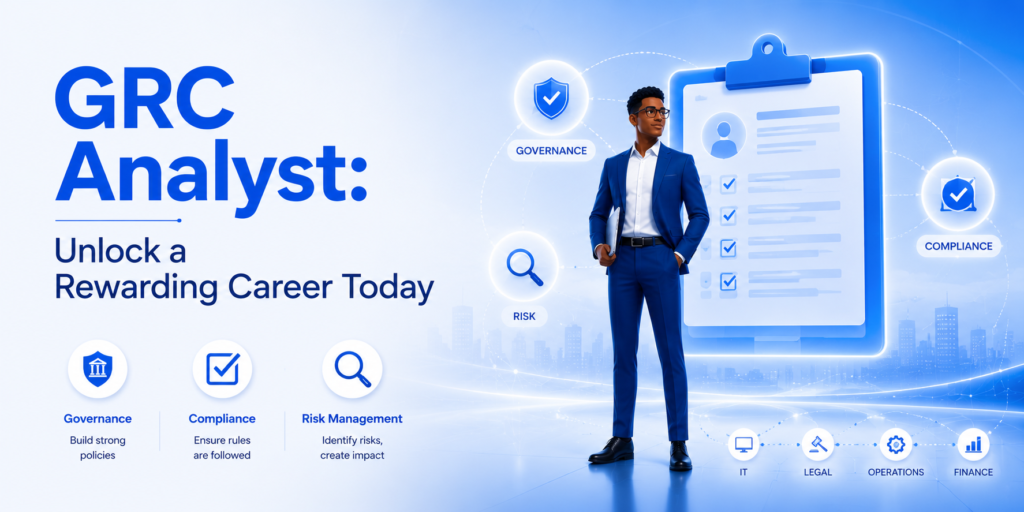
GRC Analyst: Unlock a Rewarding Career Today
Many businesses discover the value of a GRC Analyst only after losing a major deal or contract during due diligence, when they cannot produce a single risk assessment document to prove their security practices are real. This role exists precisely to prevent that outcome, and it remains one of the least understood titles in cybersecurity.
This article breaks down exactly what a GRC Analyst does, how the role compares to similar titles, which certifications actually matter, and how to break into this career even without a technical background.
What Is a GRC Analyst?
A GRC Analyst manages governance policies, assesses organizational risks, and ensures a company follows relevant regulations. They sit between technical IT teams, legal departments, and company leadership, translating security concerns into decisions everyone can understand.
The Three Pillars of the Role
Every GRC Analyst role rests on three pillars. Governance means writing and maintaining the policies that guide how the company handles data and security decisions. Risk management means identifying potential threats and tracking them in a risk register so leadership can prioritize what to fix first. Compliance means proving the company follows relevant standards, whether that’s ISO 27001, NIST, or Nigeria’s NDPR.
A Simple Real-World Example
Imagine a company discovers that customer records sit in an unencrypted database. A GRC Analyst doesn’t fix the database themselves. Instead, they trace that gap back to the company’s data protection policy, flag it as a compliance risk, document it in the risk register, and coordinate with the IT team on a fix and a timeline. They then confirm the fix satisfies whatever regulation applies, whether that’s the NDPR or a client’s security requirements.
Core Responsibilities of a GRC Analyst
Governance and Policy Work
GRC Analysts write, update, and publish the security policies that guide daily operations. This includes rules around data handling, access control, and incident response, kept practical enough that employees actually follow them.
Risk Assessment and Management
Analysts identify control gaps, evaluate how likely and how damaging different threats are, and maintain a risk assessment log that leadership references when deciding where to invest in security. This work never stops, since new threats and new infrastructure changes create new gaps constantly.
Compliance Monitoring and Audits
GRC Analysts track the company’s compliance status across multiple standards, gather evidence for audits, and identify gaps before an external auditor finds them. When an audit does happen, the analyst’s documentation becomes the company’s proof that its security claims are real.
Security Awareness and Training
Since most breaches start with human error, GRC Analysts often build and deliver security training for employees. This might mean simple phishing-awareness sessions or clear guidance on password practices, tailored to different departments and risk levels.
GRC Analyst vs. Similar Roles
GRC Analyst vs. Compliance Analyst
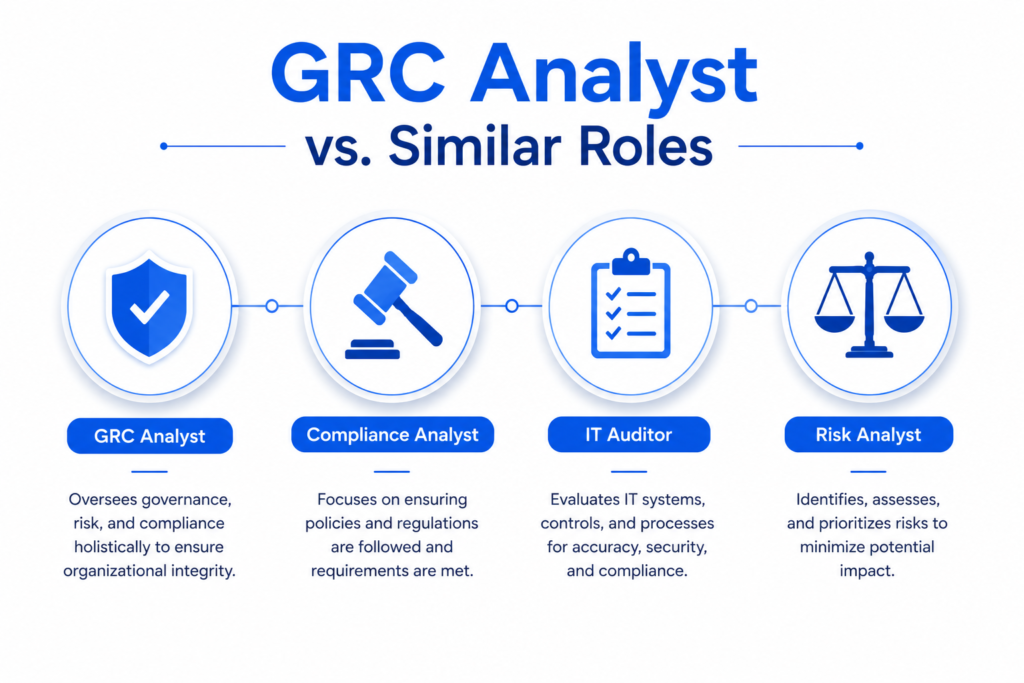
A Compliance Analyst focuses narrowly on regulatory adherence and audit coordination, working closely with legal teams. A GRC Analyst covers that same ground but also bridges into technical security controls and risk management, giving the role a broader scope.
GRC Analyst vs. IT Auditor
An IT Auditor independently assesses IT controls and processes, often reporting to an audit committee. A GRC Analyst works more collaboratively across security, IT, and business teams on an ongoing basis, rather than conducting periodic independent reviews.
GRC Analyst vs. Risk Analyst
A Risk Analyst focuses specifically on identifying and quantifying risk across the business, sometimes beyond just IT and security. A GRC Analyst folds risk work into a broader mandate that also includes governance policy and compliance monitoring.
Skills Every GRC Analyst Needs
Communication and Documentation
GRC Analysts constantly translate technical security issues into plain language for non-technical stakeholders. Strong writing matters enormously here, since policies, audit reports, and risk registers all depend on clear documentation.
Analytical and Framework Knowledge
Analysts need familiarity with standards like ISO 27001, NIST, and GDPR or NDPA, along with the analytical ability to spot security weaknesses in system designs, vendor relationships, and daily workflows.
Tools GRC Analysts Commonly Use
Beyond frameworks, GRC Analysts work with dedicated platforms like ServiceNow, OneTrust, or RSA Archer for policy and risk tracking, alongside everyday tools like Excel and Jira for documentation and task management.
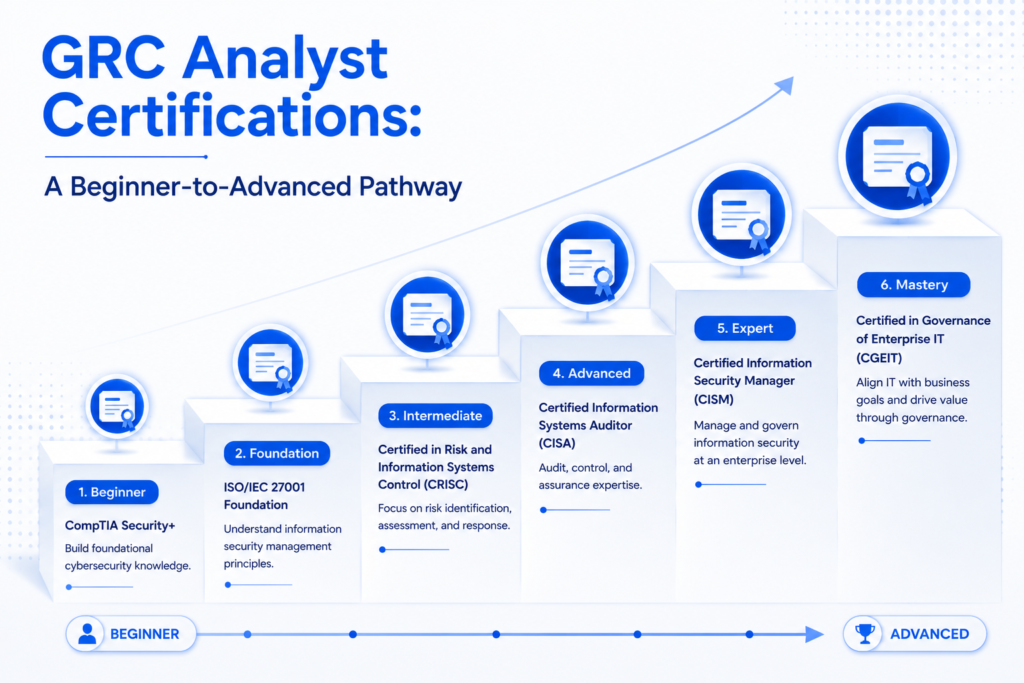
GRC Analyst Certifications: A Beginner-to-Advanced Pathway
Where to Start With No Experience
If you’re starting fresh, CompTIA Security+ builds the foundational security knowledge every GRC Analyst needs, without requiring a technical degree. The Google Cybersecurity Certificate offers a similarly accessible, self-paced alternative for beginners.
Advanced Certifications for Career Growth
Once you have foundational experience, certifications like CISA (Certified Information Systems Auditor), CRISC (Certified in Risk and Information Systems Control), or ISC2’s CGRC validate specialized GRC expertise and open doors to senior roles. These credentials come from a recognized certification authority in the field, which matters when employers evaluate your qualifications.
How to Become a GRC Analyst With No Technical Background
You don’t need to code to become a GRC Analyst. Professionals from legal, audit, finance, and business backgrounds transition into this role successfully because they already know how to read policy, assess risk, and document findings clearly.
Start with a foundational certification, then practice real skills by volunteering to help a small business or nonprofit with a basic risk assessment. Apply specifically for “GRC Analyst” or “Junior Compliance Analyst” titles rather than generic cybersecurity postings, since hiring managers search for role-specific keywords. Highlight any documentation, audit, or policy-adjacent experience from your current job, even if it wasn’t in tech, since these skills transfer directly.
For a complete step-by-step walkthrough, see our dedicated guide on how to become a GRC Analyst.
GRC Analyst Career Path and Salary Expectations in Nigeria
Entry-level GRC Analyst roles at Nigerian fintech, banking, and consulting firms typically start modestly but grow quickly with certification and hands-on experience. As you move into mid-level and senior GRC roles, particularly with CRISC or CGRC certification, compensation increases significantly, especially at multinational corporations and banks facing heavy regulatory scrutiny.
Career progression typically moves from GRC Analyst to Senior GRC Analyst, then toward GRC Manager, Compliance Director, or Chief Risk Officer for those who stay in the field long term. Remote GRC roles for international clients have also become increasingly accessible to skilled Nigerian professionals, often paying well above local-only positions.
Final Thoughts: Is a GRC Analyst Career Right for You?
A GRC Analyst career suits people who enjoy clear thinking, careful documentation, and translating complexity into simple guidance, not people who need to write code all day. If that sounds like you, whether you’re coming from audit, legal, finance, or starting completely fresh, this role offers one of the most realistic entry points into cybersecurity available today.
The path forward starts with one certification and one practice risk assessment, not a leap into a title you’re unsure you qualify for. If you want structured guidance through this exact path, ExcelMindCyber offers training programs built specifically around GRC career preparation, helping you move from foundational knowledge to job-ready confidence.
What is the difference between a GRC Analyst and a cybersecurity analyst?
A cybersecurity analyst focuses on directly defending technical systems, monitoring threats, and responding to incidents. A GRC Analyst focuses on the policies, risk documentation, and compliance work that supports those technical defenses at an organizational level.
Do I need a computer science degree to become a GRC Analyst?
No. Many successful GRC Analysts come from legal, audit, finance, or business backgrounds. Strong writing, analytical thinking, and attention to detail matter more than a technical degree.
Which certification should I get first as a GRC Analyst?
CompTIA Security+ or the Google Cybersecurity Certificate both work well as starting points for beginners. Once you have foundational experience, CRISC or CGRC become strong next steps for career growth.
How long does it take to become a GRC Analyst from scratch?
Most people can build foundational knowledge and land an entry-level role within three to six months of focused study and certification, depending on how much time they dedicate weekly.