
 English
 Arabic
 English
 French
 German
IT GRC Certification: Which One Should You Actually Get First
A cybersecurity certification roadmap only works if it matches where you actually are right now, not where some generic list aSearch “IT GRC certification” and you will find long lists. Ten options. Twelve options. Most of them need years of experience you do not have yet.
That is not a starting point. That is a wall.
This guide is different. It tells you which IT GRC certification you can go for right now. It tells you which ones to save for later. And it shows you how to move from zero to fully qualified, without wasting money on the wrong first step.
Table of Contents
Why So Many GRC Certifications Exist
GRC certifications come from different groups. ISACA, ISC2, OCEG, the GRC Institute. Each group focuses on a different part of the field.
Some focus on IT risk. Some focus on running a whole company’s governance. Some focus on audits. Some cover broad GRC ideas. That is why the list feels so long and so confusing.
Here is what most guides will not tell you. Almost every certification on those “top 10” lists needs two to five years of work experience before you can even sit the exam. If you are switching careers or just starting out, this is not confusing. It simply was not built for you yet.
Knowing this now saves you from feeling overwhelmed. You are not failing to understand something hard. You are looking at requirements that were never meant for beginners in the first place.
The Certification Most Beginners Overlook
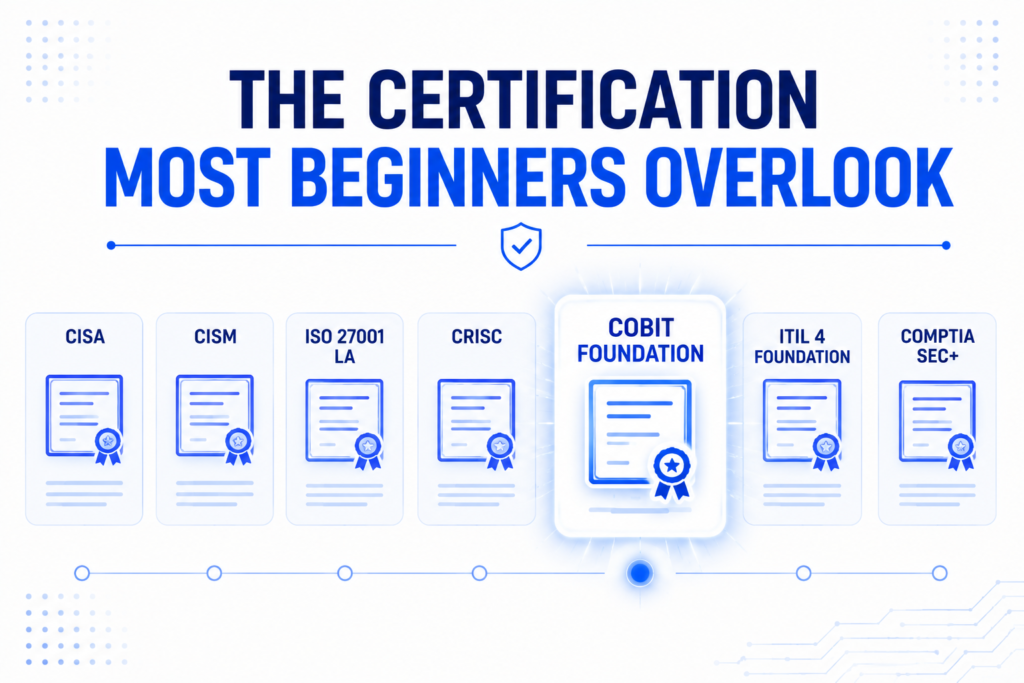
GRC Professional (GRCP)
The GRC Professional certification comes from OCEG. It is the one real exception on every major list. It has no minimum experience needed. Anyone can sit for it, no matter their background.
The exam covers core GRC terms and ideas. It shows how governance, risk, and compliance connect to each other. This is exactly the foundation you need before anything else makes sense.
Here is the problem. Most guides bury GRCP in the middle of a long list. They give it the same weight as certifications that need five years of experience. That is misleading.
If you are asking “where do I even start,” GRCP is your honest answer.
Pairing GRCP with a Foundational Certification
GRCP alone proves you understand GRC ideas. But pair it with a foundational security certification, like CompTIA Security+, and you round out your knowledge with real technical basics. GRC work touches these basics constantly.
Together, these two certifications give you a real starting point. They prove your knowledge without needing years of job history first.
Certifications That Require Experience First
Once you have foundational knowledge and some hands-on practice, these certifications become real future goals. Not something to chase right now.
CRISC
CRISC comes from ISACA. It focuses on finding, assessing, and monitoring IT risk. It usually needs three years of experience across specific risk areas. Think of CRISC as a strong mid-career move, once you have already managed real risk. Not a first step.
CGRC
CGRC comes from ISC2. It proves you can manage risk inside information systems. It matters most in government or heavily regulated work. It needs two years of paid experience across its domains.
There is one flexible option here. ISC2 lets you pass the exam first, then earn the experience within three years as an Associate.
CISA and CISSP
CISA and CISSP are well-respected names, from ISACA and ISC2. Both need five years of relevant experience. These sit firmly in senior-career territory. Treat them as long-term goals. Something to plan toward, not something to chase immediately.
How to Choose the Right Certification for Your Stage
Your certification path should match which GRC role fits you right now. Not the role you eventually want. Here is how to think about it, stage by stage.
If You Have Zero Experience
Start with GRCP, paired with a foundational certification like Security+. Then spend real energy on hands-on practice too.
Try a mock risk assessment for a small business or nonprofit. This builds real experience you can actually talk about while you study.
This combination gives you real proof of ability. You will not need to stretch the truth about a background you do not have yet. And it sets you up well for your first role as a GRC Analyst.
If You Have 1-2 Years of IT or Security Experience
You are close to qualifying for certifications like CGRC. Use this time to document your work clearly. Start tracking hours toward experience requirements now.
Many candidates lose time simply because they did not keep records early enough.
If You’re Already Working in GRC or Compliance
CRISC, CISA, or CISSP become real next steps here, depending on where you want to specialize. Choose based on where your career should go, risk management, auditing, or broader security leadership. Not based on which certification just sounds the most impressive.
IT GRC Certification Cost and Realistic Budgeting
Exam fees for the experience-gated certifications usually run $500 to $760, depending on membership status. That does not include training materials or renewal fees down the line.
GRCP costs much less by comparison. That makes it a lower-risk starting point, both financially and experience-wise.
Budget with this in mind. Instead of saving for one expensive advanced certification you do not yet qualify for, put your first investment toward GRCP and Security+. Let your career growth fund the bigger certifications later, once you actually meet their requirements.
A Simple Certification Sequence That Actually Works
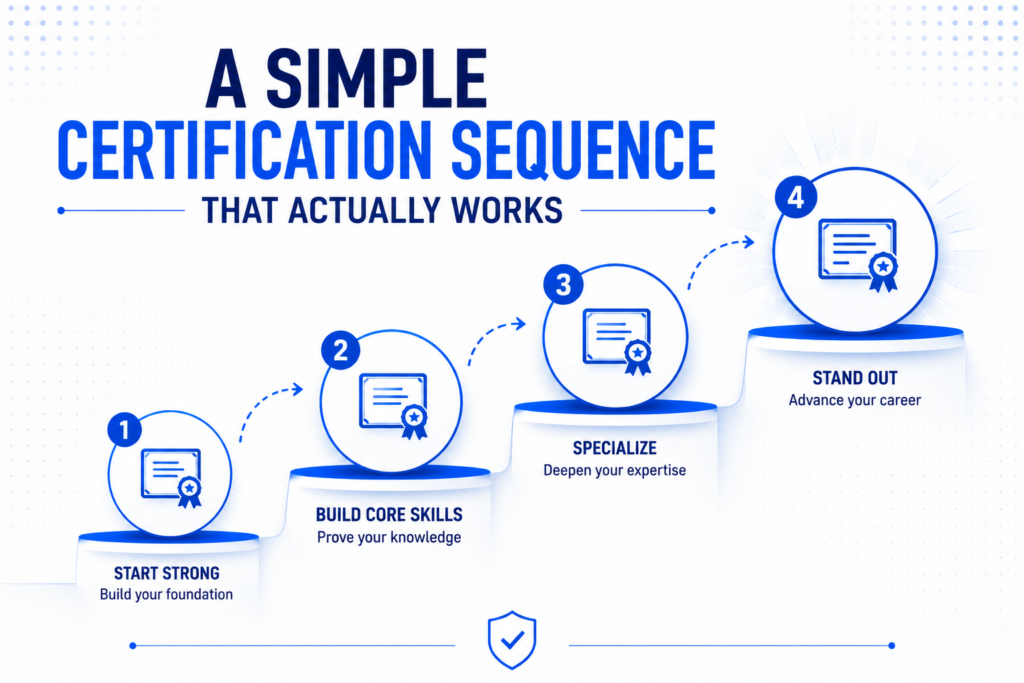
Start with GRCP and a foundational certification like Security+. Build hands-on practice projects at the same time.
Use your first one to two years of work experience, even entry-level work, to qualify for CGRC. From there, specialize into CRISC, CISA, or CISSP based on where your career is heading.
This sequence turns an overwhelming list of ten certifications into four clear, doable stages. It is the same step by step roadmap approach that works for building a full GRC career, not just picking one certification.
Final Thoughts: Start With What You Can Actually Qualify For
Most IT GRC certification guides hand you a list and leave you to sort it out alone. That is not a roadmap. That is guesswork dressed up as advice.
The real path forward is simpler than it looks. Start with what you actually qualify for today. Build real experience alongside it. Let the advanced certifications come once you have earned the right to pursue them.
If you want real support instead of piecing this together alone, not knowing which certification to start with, or how to turn study time into real, interview-ready skill, EMC Institute’s cybersecurity training programs are built around this exact certification sequence. You get hands-on practice, career guidance, and a clear roadmap from the basics all the way to job readiness. Watch a quick walkthrough of how the program works to see if it fits where you are right now.
What is the best certification for GRC?
There’s no single “best” certification, it depends on your experience level. If you’re starting from zero, GRCP is the best option since it has no experience requirement. If you already have a few years in IT or security, CRISC, CGRC, or CISA become stronger choices depending on whether you want to specialize in risk, information systems, or auditing.
Is GRC certification worth it?
Yes, especially if you’re aiming for roles in compliance, risk management, or IT audit. A GRC certification signals to employers that you understand how governance, risk, and compliance work together, which sets you apart from candidates who only have general IT or security knowledge. The value grows as you stack certifications over time rather than relying on just one.
Does GRC require coding?
No. GRC work focuses on policy, risk assessment, documentation, and communication, not writing code. Many successful GRC professionals come from legal, audit, or business backgrounds with no coding experience at all. What matters more is clear thinking and the ability to explain risk to people who aren’t technical.
What is a GRC certification?
A GRC certification is a credential that proves you understand governance, risk, and compliance concepts and can apply them in a real organization. Different certifications focus on different areas, some on IT risk specifically, some on broad governance, some on audit, so the right one depends on your career goals and experience level.
How long does it take to get a GRC certification?
For an entry-level certification like GRCP, most people prepare within four to eight weeks of steady study. Experience-gated certifications like CRISC or CISA take longer overall, not because the exam itself is harder, but because you need to build the required years of work experience before you’re even eligible to sit for it.