
 English
 Arabic
 English
 French
 German
The ExcelMindCyber Institute: Why Professionals Keep Joining?
The ExcelMindCyber Institute: Why Professionals Keep Joining?
When people search for ExcelMindCyber reviews, they are usually trying to answer one question: Is this cybersecurity program really worth it?
Cybersecurity has become one of the fastest-growing career fields in the United States. Companies are struggling to find professionals who understand how to manage risk, protect sensitive data, and comply with security regulations. As a result, many professionals are now exploring training programs that can help them transition into cybersecurity.
One program that continues to generate attention is the ExcelMindCyber Institute. It focuses on helping beginners and career switchers enter the cybersecurity field through Governance, Risk, and Compliance (GRC).
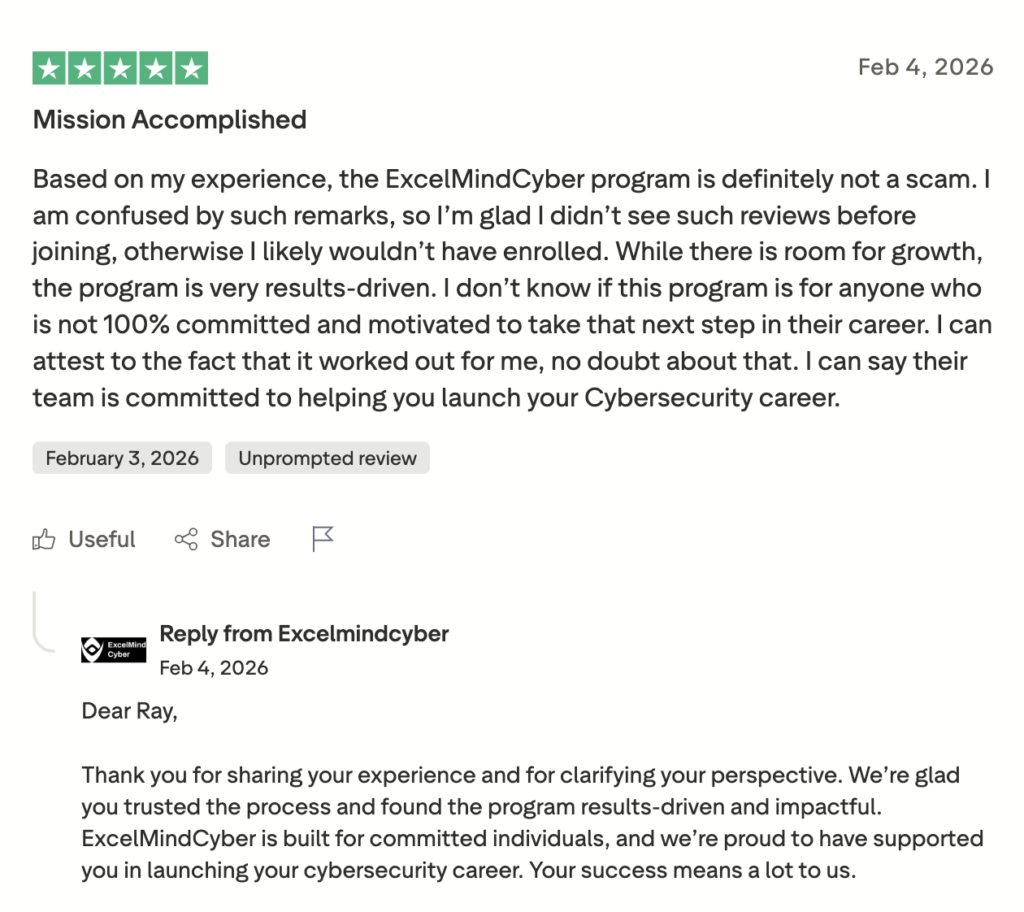
Across online platforms and student testimonials, many participants describe the program as a practical path into cybersecurity, especially for people without a technical background.
In this article, we examine what ExcelMindCyber offers, what students are saying, and why the program is gaining recognition among aspiring cybersecurity professionals.

What Is the ExcelMindCyber Institute?
ExcelMindCyber is a cybersecurity training institute founded to help professionals transition into the cybersecurity field without needing a traditional technical background.
The program focuses heavily on Governance, Risk, and Compliance (GRC), an area of cybersecurity that deals with managing organizational risk, meeting regulatory requirements, and protecting sensitive information systems.
Unlike many technical cybersecurity bootcamps that emphasize coding or engineering roles, ExcelMindCyber is designed for people coming from fields such as finance, audit, compliance, law, business administration, and project management.
Participants learn how cybersecurity frameworks work in real organizations and how companies manage risk, security policies, and compliance obligations.
The training is structured around a career transition model, meaning students are not only introduced to cybersecurity concepts but are also guided on how to position themselves for cybersecurity roles. This includes understanding industry frameworks, building professional resumes, optimizing LinkedIn profiles, and preparing for job interviews.
For many beginners exploring cybersecurity for the first time, ExcelMindCyber positions itself as a practical entry point into the industry.
RELATED: Cybersecurity Jobs: 2026 Comprehensive Guide
Why ExcelMindCyber Institute Stands Out from Other Cybersecurity Programs
Many cybersecurity training programs focus heavily on technical skills such as coding, network engineering, or penetration testing. While those paths are valuable, they can feel overwhelming for people who are new to technology or transitioning from non technical careers.
ExcelMindCyber takes a different approach.
The program focuses on Governance, Risk, and Compliance, often referred to as GRC. This area of cybersecurity focuses on managing security policies, risk management, regulatory compliance, and protecting organizational systems from a strategic perspective.
Because of this focus, professionals from fields such as finance, compliance, project management, audit, banking, healthcare administration, and law often find it easier to transition into cybersecurity through GRC roles.
Another major difference is the career transition support built into the training.
Many bootcamps only teach technical material and leave students to figure out the job market on their own. ExcelMindCyber combines cybersecurity training with practical career preparation. Students are guided on how to position their existing experience for cybersecurity roles, how to build resumes that align with industry expectations, and how to present themselves confidently during interviews.
The program also emphasizes real-world application rather than purely theoretical learning. Participants are introduced to cybersecurity frameworks, risk management practices, and compliance structures used by organizations.
This approach helps students understand how cybersecurity works inside companies and how their skills can fit into real business environments.
For many professionals exploring cybersecurity for the first time, this practical and structured approach is one of the reasons ExcelMindCyber continues to attract attention in conversations around cybersecurity career transitions.
What Students Are Saying: ExcelMindCyber Reviews

Many people searching for ExcelMindCyber reviews want to understand one thing clearly: Do students actually find the program helpful for entering cybersecurity?
Looking at testimonials from participants across different backgrounds, several consistent themes appear.
One of the most common points mentioned is clarity. Many students explain that the training helped them understand cybersecurity in a simple way, especially the Governance, Risk, and Compliance side of the industry. For individuals who previously believed cybersecurity required heavy coding or advanced technical skills, the program often introduces a different perspective.
Another recurring theme in the reviews is confidence building. Participants frequently describe how the program helped them move from uncertainty about cybersecurity to feeling capable of pursuing a career in the field. Several testimonials mention that the explanations, structured learning sessions, and examples used during the training made complex concepts easier to understand.
Many reviews also highlight the career guidance component of the program. Students often appreciate learning how to position their existing professional experience for cybersecurity roles. For example, people coming from backgrounds in finance, compliance, auditing, administration, or business operations discover that many of their existing skills can translate into GRC related positions.
Mentorship is another aspect that appears repeatedly in ExcelMindCyber reviews. Participants often mention the guidance provided throughout the training, particularly around career direction, resume building, and preparing for cybersecurity opportunities.
Overall, the reviews suggest that the program resonates strongly with people who are new to cybersecurity and looking for a structured pathway into the field, especially those transitioning from non technical careers.
While every training program works differently for each individual, the recurring feedback from participants reflects why ExcelMindCyber continues to attract interest from professionals exploring cybersecurity career opportunities.
READ MORE: Is Cybersecurity Hard to Learn? A Complete Analysis
Why Governance, Risk, and Compliance (GRC) Is a Powerful Entry into Cybersecurity

One of the core ideas behind ExcelMindCyber is that not every cybersecurity career requires coding or deep technical engineering skills. In fact, many organizations need professionals who understand how to manage risk, enforce security policies, and ensure compliance with industry regulations.
This is where Governance, Risk, and Compliance comes in.
GRC focuses on how organizations identify risks, implement security controls, and comply with regulatory frameworks that protect sensitive information. Instead of building security systems, GRC professionals help organizations ensure those systems are properly managed, documented, and aligned with regulations.
Many industries rely heavily on GRC specialists. Banks, healthcare institutions, technology companies, government agencies, and large corporations all need professionals who understand compliance requirements and risk management frameworks.
This is one reason GRC roles have become increasingly attractive for people transitioning into cybersecurity.
Professionals with backgrounds in finance, auditing, compliance, project management, law, business administration, and operations often find that many of their existing skills translate well into GRC roles. Understanding regulations, documenting processes, evaluating risk, and communicating policies are all valuable capabilities in this area of cybersecurity.
By focusing on this pathway, ExcelMindCyber introduces students to cybersecurity from a strategic and business perspective, helping them understand how security fits into real organizations.
For many career switchers, this approach provides a practical entry point into the cybersecurity field while still opening doors to broader opportunities within the industry.
Who Should Join the ExcelMindCyber Program?

Not every cybersecurity program is designed for the same type of learner. One of the reasons ExcelMindCyber attracts attention is that it is structured for people who want a clear transition into cybersecurity, not just technical theory.
Below are some of the professionals who often benefit the most from the program.
1. Career Changers Exploring Cybersecurity
Many people discover cybersecurity after spending years in another industry. ExcelMindCyber is structured to help professionals understand how their existing experience can translate into cybersecurity roles, particularly in Governance, Risk, and Compliance.
2. Professionals in Finance, Audit, and Compliance
Individuals working in banking, accounting, AML, risk management, and regulatory compliance often find that many of their responsibilities already overlap with GRC concepts. This makes the transition into cybersecurity more natural.
3. Beginners with No Technical Background
One of the biggest fears people have about cybersecurity is the assumption that they must know coding or advanced IT skills. ExcelMindCyber introduces cybersecurity concepts in a structured way that helps beginners understand the industry without feeling overwhelmed.
4. Immigrants Seeking Stable Tech Careers
Many immigrants in the United States, the United Kingdom, and Canada look for career paths that provide stability, strong salaries, and long-term opportunities. Cybersecurity has become one of the fields where professionals from diverse backgrounds are building new careers.
5. Professionals Looking to Enter the GRC Field
Governance, Risk, and Compliance roles continue to grow as organizations face increasing regulatory and security requirements. For individuals interested in this side of cybersecurity, the program introduces the frameworks, responsibilities, and industry expectations involved.
6. People Who Want Structured Career Guidance
Some training programs provide information but leave students to navigate the job market on their own. ExcelMindCyber combines cybersecurity education with career positioning guidance to help participants understand how to present themselves for opportunities.
For individuals exploring cybersecurity as a long term career path, understanding where they fit within the industry is often the first step. This is where structured programs like ExcelMindCyber aim to provide direction and clarity.
SEE ALSO: Difference Between Risk Assessment and Risk Management: 2026 Complete Guide
What You Learn Inside the ExcelMindCyber Program
The ExcelMindCyber program is designed to give students both cybersecurity knowledge and career positioning skills. Instead of focusing only on theory, the training introduces practical concepts used by organizations to manage security and risk.
Below are some of the key areas participants are introduced to during the program.
1. Cybersecurity Fundamentals
Students start with an introduction to the cybersecurity landscape. This includes understanding common threats, the role cybersecurity plays in protecting organizations, and how different cybersecurity domains operate.
2. Governance, Risk, and Compliance (GRC) Frameworks
A major part of the training focuses on how companies manage security policies and regulatory obligations. Participants are introduced to widely used security frameworks and learn how organizations approach risk management and compliance.
3. Risk Assessment and Security Policies
Students learn how organizations identify potential risks and implement policies designed to reduce security threats. This helps participants understand how cybersecurity decisions are made from a business and governance perspective.
4. Industry Standards and Regulatory Compliance
Many companies must comply with strict regulations when handling sensitive information. The program explains how compliance requirements influence security practices and why organizations invest heavily in risk management.
5. Career Positioning and Resume Development
Beyond technical knowledge, the program also emphasizes how participants can position themselves for cybersecurity roles. This includes resume development, LinkedIn optimization, and understanding how to communicate transferable skills.
6. Interview Preparation for Cybersecurity Roles
Participants are introduced to the types of questions commonly asked in cybersecurity interviews and how to present their knowledge and experience confidently.
By combining cybersecurity education with career preparation, the ExcelMindCyber program aims to help students understand both the technical foundations of cybersecurity and how to navigate the job market.
Key Takeaways from ExcelMindCyber Reviews
After examining multiple ExcelMindCyber reviews and student experiences, several clear insights emerge about why the program continues to attract attention among people exploring cybersecurity careers.
1. The Program Is Beginner Friendly
Many participants mention that the training breaks down cybersecurity concepts in a way that is easier to understand, especially for people without a technical background.
2. Strong Focus on GRC Career Paths
A recurring theme in the reviews is the emphasis on Governance, Risk, and Compliance. This pathway allows professionals from fields like finance, compliance, and business operations to transition into cybersecurity more easily.
3. Practical Career Preparation
Several testimonials highlight that the program does not focus only on theory. Participants are introduced to resume strategies, LinkedIn positioning, and interview preparation that align with cybersecurity roles.
4. Mentorship and Guidance
Students frequently mention the mentorship element of the program. Having guidance from experienced professionals appears to help many participants gain clarity about their career direction.
5. Confidence Building for Career Switchers
For many beginners, cybersecurity can feel intimidating at first. Reviews often describe how the structured approach of the program helps participants build confidence in their ability to pursue cybersecurity roles.
6. Accessible Entry into Cybersecurity
One of the strongest themes across the testimonials is accessibility. The program appears to resonate particularly with people who previously believed cybersecurity required advanced technical skills or programming knowledge.
Taken together, these insights explain why many professionals researching cybersecurity training programs come across ExcelMindCyber reviews while exploring possible entry points into the industry.
MORE: What Are Capture-the-Flag Competitions in Cybersecurity?
Why ExcelMindCyber Is Gaining Recognition in Cybersecurity Training
As interest in cybersecurity careers continues to grow, many training programs have emerged claiming to prepare people for the industry. However, not all programs focus on the same career pathways or learning approaches.
ExcelMindCyber has gained recognition among aspiring cybersecurity professionals because of its focus on practical career transition rather than purely technical instruction.
One factor contributing to this attention is the program’s emphasis on Governance, Risk, and Compliance, an area of cybersecurity that continues to grow as organizations face stricter security regulations and risk management requirements.
Another reason the program stands out is its focus on accessibility. Instead of assuming that students already have a technical background, the training introduces cybersecurity concepts in a structured way that helps beginners understand how the industry works.
For professionals coming from fields such as finance, compliance, business operations, and project management, this approach often feels more relatable because many of the skills required in GRC roles overlap with their existing experience.
In addition, ExcelMindCyber places attention on career positioning, helping participants understand how their background can fit into cybersecurity roles and how to present that experience to employers.
As more professionals explore cybersecurity as a long term career path, programs that combine industry knowledge, structured guidance, and career transition support are attracting increasing attention. This growing interest is one reason ExcelMindCyber continues to appear in conversations around cybersecurity training programs.
Final Takeaway…
After reviewing the experiences shared by participants, a clear picture begins to emerge. Many people exploring cybersecurity careers are not necessarily coming from technical backgrounds. They are professionals looking for a structured path into the industry and guidance on how to position themselves for opportunities.
This is where ExcelMindCyber has built much of its reputation.
The program focuses on introducing cybersecurity from a practical perspective, particularly through Governance, Risk, and Compliance. For individuals transitioning from fields such as finance, compliance, business administration, and operations, this pathway often provides a clearer entry into cybersecurity.
Another aspect frequently highlighted in ExcelMindCyber reviews is the combination of training and career preparation. Participants are not only introduced to cybersecurity concepts but are also guided on how to present their experience through resumes, professional profiles, and interviews.
For anyone researching cybersecurity training options, reading through student experiences can provide useful insight into how different programs operate and what type of learners they support.
Choosing the right training program depends on your career goals, learning style, and the pathway you want to pursue within cybersecurity.
If you are considering a transition into cybersecurity, exploring programs like ExcelMindCyber can be one way to better understand the opportunities available in this growing field.
Start Your Cybersecurity Career with ExcelMindCyber
Cybersecurity is one of the fastest-growing career fields today. Organizations across industries are searching for professionals who can help manage risk, protect sensitive information, and ensure compliance with security standards.
However, many people who want to enter cybersecurity often face one big challenge: they don’t know where to start.
ExcelMindCyber was created to bridge that gap. The program is designed to help beginners and career switchers understand cybersecurity from a practical perspective, especially through Governance, Risk, and Compliance.
Instead of navigating the transition alone, you can learn the core concepts of cybersecurity, understand how companies manage risk and compliance, and position yourself for real opportunities in the industry.
If you are ready to explore a career in cybersecurity and want a structured path into the field, ExcelMindCyber provides the training and guidance to help you take that next step.
Visit ExcelMindCyber.com to learn more about the program and discover how you can begin your journey into cybersecurity today.
FAQ
Is ExcelMindCyber a good institute for beginners?
Yes. Many participants who join ExcelMindCyber are new to cybersecurity. The program introduces core cybersecurity concepts in a structured way, with a strong focus on Governance, Risk, and Compliance. This makes it easier for beginners and professionals from non technical backgrounds to understand how cybersecurity works in real organizations.
Does ExcelMindCyber require coding experience?
No. One of the main advantages of the program is that it focuses on areas of cybersecurity that do not require coding. The training emphasizes Governance, Risk, and Compliance, which involves managing security policies, risk assessments, and regulatory requirements rather than software development or technical engineering.
Can someone from a non technical background transition into cybersecurity through ExcelMindCyber?
Yes. Many participants come from fields such as finance, compliance, project management, business administration, healthcare, and auditing. These backgrounds often translate well into GRC related cybersecurity roles because they already involve understanding regulations, risk management, and organizational processes.
What kind of support does the ExcelMindCyber institute provide?
In addition to cybersecurity training, the program includes guidance on career positioning. Participants are introduced to resume development, LinkedIn profile optimization, and interview preparation strategies designed to help them pursue cybersecurity opportunities after completing the training.