
 English
 Arabic
 English
 French
 German
GRC Interview Questions 2026 That Win You the Offer

You have a GRC interview coming up. You know some of the basics. But you still feel nervous, and maybe you are not even sure where to start preparing.
Here is the truth. Most GRC interview questions are not hard on their own. What makes them hard is not knowing what the interviewer is really asking.
This guide shows you the real GRC interview questions people get asked most. It shows you what interviewers are truly listening for. And it shows you how to answer with confidence, even if you have certifications and practice projects instead of years on the job.
Table of Contents
What Interviewers Listen For Beyond the Textbook Answer
Every GRC question has two answers.
The first is the textbook answer. That is the definition you memorized.
The second is the real answer. This is what your response shows about you. Can you think clearly when things are unclear? Can you explain risk to someone who is not technical? Would you stay calm if you found a real compliance gap, or would you panic?
Keep this in mind as you read on. Getting the definition right matters. But how calm and clear you sound matters just as much.
Core GRC Fundamentals You Need to Know Cold
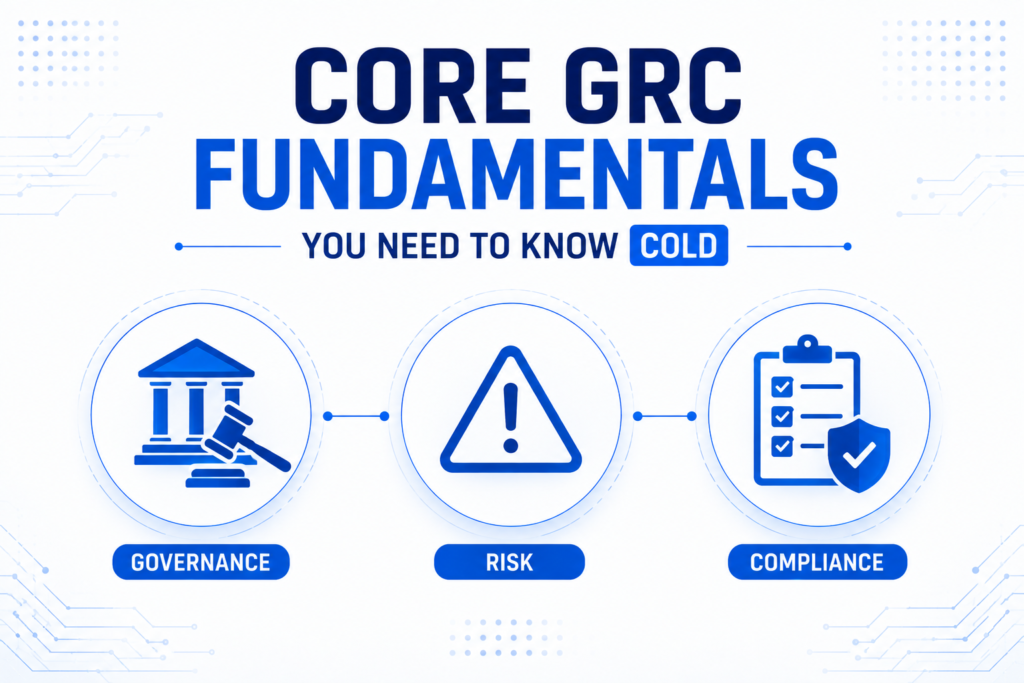
Governance, Risk, and Compliance Basics
You should be able to explain governance, risk, and compliance in one simple sentence each. No stumbling.
Governance means the rules and policies that guide how a company runs.
Risk management means finding threats and deciding which ones matter most.
Compliance means following the laws and standards that apply to your industry.
These three ideas sit behind the most common GRC interview questions. If you hesitate on the basics, it tells the interviewer you have not fully learned the governance, risk, and compliance fundamentals yet.
You will also likely get asked about frameworks like ISO 27001, GDPR, SOC 2, or HIPAA. You do not need deep expert knowledge of each one for an entry-level role. But you should know each name and roughly what it covers.
If this list of frameworks feels overwhelming, you are not alone. Most beginners feel the same way at first, and confusion over which certification actually matters is one of the biggest reasons people delay applying. You do not need to master every framework before you interview. You need to know the basics well enough to speak about them clearly.
Inherent Risk vs. Residual Risk
This one trips up more candidates than almost anything else.
Inherent risk is the risk that exists before you add any controls.
Residual risk is what is left after you add those controls.
Here is a simple way to picture it. A company stores customer data online. Before any protection, that risk is high, since breaches happen often and cause real damage. Now the company adds encryption and access controls. The risk left over, the residual risk, drops a lot. It rarely reaches zero, but it becomes much smaller.
A Simple Framework for Scenario-Based Questions
An interviewer describes a situation and asks what you would do. Do not rush into dramatic action.
Use this order instead:
- Verify the situation first.
- Investigate the details second.
- Decide on action third.
This calm, step-by-step approach is what separates strong candidates from ones who jump straight to worst-case moves before even confirming there is a real problem.
Worked Example: “How Would You Handle a Compliance Gap?”
Answer this in a clear sequence.
First, explain how you would confirm the gap is real. Check documents or system settings.
Second, explain how you would judge how serious it is. Who does it affect? How bad could it get? How urgent is it?
Third, walk through your fix. Mention the quick fix, then the longer-term policy change that stops it from happening again.
Finally, mention how you would tell the right people about it.
This structure works whether you are describing something real that happened to you, or a practice scenario you worked through on your own.
Behavioral Questions and How to Structure Your Answer
GRC behavioral interview questions test how you communicate and think, not just what you know. Expect questions like “tell me about a time you disagreed with a colleague” or “describe a time you convinced leadership to prioritize a risk.”
Pick one real, specific example. Do not give a vague answer. Keep it simple: what was the situation, what did you do, and what happened after.
Talking About Risk to Non-Technical Stakeholders
This question comes up often because the skill behind it is rare.
Practice explaining one risk idea, like a data breach or a compliance gap, in plain words. Use language you would use with someone who has never worked in tech. If you can drop the jargon and still make the risk and its impact clear, you will handle this question well no matter how it is asked.
“I Have No Experience,” How to Answer with Confidence
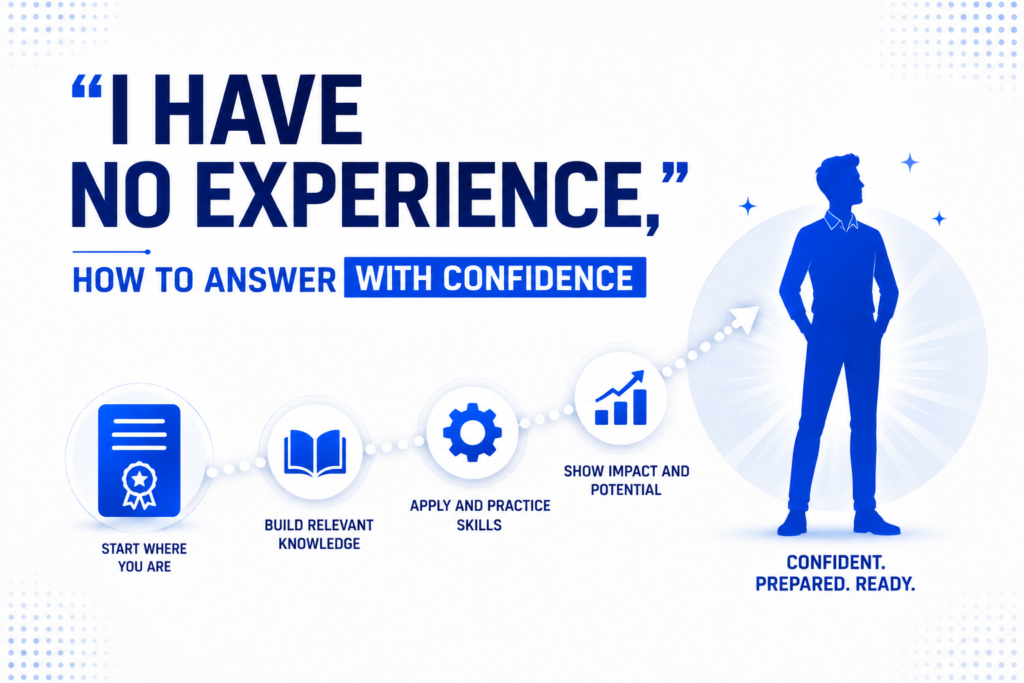
Every career changer quietly worries about this question. It rarely gets asked directly, and it can leave you unsure which GRC role fits you until you’re already in the interview.
It hides inside questions like “describe a time you found a compliance gap” or “walk me through a risk assessment you have done.” Almost no guide covers this well, even though it is the biggest worry for anyone facing entry level GRC interview questions.
Using Certifications and Practice Projects as Proof
A certification proves you have built real knowledge, even without job history. Say so directly. Do not apologize for lacking experience.
If you have done a practice risk assessment for a small business, a nonprofit, or even a personal project, that becomes your real answer to “tell me about a time.” Walk through it the same way you would a real job story, the same way a GRC Analyst would. What did you find? How did you decide what mattered most? What did you recommend?
Interviewers care more about how clearly you think through a problem than whether it happened at a big company.
Questions to Ask Your Interviewer
Ask thoughtful questions at the end. This shows real interest, not just a need for any job.
Try asking which compliance frameworks the company focuses on. Ask how the GRC team works with technical security staff. Or ask what a strong first ninety days looks like in the role.
Questions like these show you are already thinking like part of the team.
Final Thoughts: Walking Into Your GRC Interview Ready
Knowing which GRC interview questions and answers actually matter changes how you prepare.
You do not need to memorize fifty definitions. You need to understand the handful of ideas and stories that come up again and again. Then you need to explain your thinking clearly, even under pressure.
Getting there on your own can feel like guesswork, not knowing which certification to start with, which skills actually matter, or how to turn study time into real, interview-ready confidence. EMC Institute’s cybersecurity training programs remove that guesswork. They give you structured learning, a clear roadmap from foundational knowledge and hands-on practice to job readiness, real practice projects, and support at every step, so you walk into your interview with proof of skill, not just theory. Visit ExcelMindCyber.com to see which program fits where you are right now.
What are the three pillars of GRC?
Governance, risk, and compliance make up the three pillars. Governance covers the rules and policies that guide how a company runs. Risk management means finding threats and deciding which ones matter most. Compliance means following the laws and standards that apply to your industry. Every GRC question you get asked connects back to one of these three ideas.
What are the 7 most common interview questions?
What is GRC and why does it matter?
What’s the difference between inherent risk and residual risk?
How would you handle a compliance gap you found?
What compliance frameworks are you familiar with?
Tell me about a time you disagreed with a colleague.
How would you explain a risk to someone who isn’t technical?
Where do you see yourself in this field in a few years?
The first four test your knowledge. The rest test how you think and communicate, which matter just as much in GRC work.
How do I prepare for a GRC interview?
Review the fundamentals until you can explain each one in one clear sentence. Practice your two or three strongest stories out loud, not just in your head. Research the company so you understand which risks and regulations matter most to their industry. Get a good night’s sleep before the interview instead of cramming until the last minute, a clear head beats last-minute memorizing every time.
What are the 5 toughest interview questions?
Describe a time you found a compliance gap with no clear guidance on how to fix it.
How would you handle a disagreement with leadership over an acceptable risk?
Walk me through how you’d prioritize ten risks with limited time and budget.
Tell me about a mistake you made and what you learned from it.
How would you convince a team to follow a policy they find annoying or slow?
These are tough because there’s no perfect textbook answer, interviewers want to see how you think through real tension, not just recite a definition.
Do I need real work experience to answer GRC interview questions well?
No. Certifications and practice projects, like a mock risk assessment for a small business, work just as well as real job stories. Interviewers care more about how clearly you think through a problem than where the experience came from.