
 English
 Arabic
 English
 French
 German
Is a Masters in Cybersecurity Worth It in 2026?
A masters in cybersecurity is worth it if your goal is to move into leadership roles, specialize in high-level domains like GRC or security architecture, or increase your long-term earning potential.
However, for beginners or career switchers, certifications and hands-on experience are often a faster and more cost-effective way to enter the field.
In simple terms, a master’s degree helps you grow higher in cybersecurity, while certifications help you get in faster.
In this guide, you’ll learn when a master’s makes sense, when it doesn’t, and the best path based on your current level.

What Is a Masters in Cybersecurity?
For many people, especially beginners or career switchers, spending 1 to 2 years and tens of thousands of dollars on a master’s degree is not the most efficient path into cybersecurity.
There are now structured training programs that focus on helping you gain practical, job-ready skills and start earning faster.
For example, programs like ExcelMindCyber’s 90-day training are designed to help you:
- Learn in-demand cybersecurity skills, especially in areas like governance, risk, and compliance (GRC)
- Work on real-world projects instead of just theory
- Get support with resumes, interviews, and job applications
- Start landing interviews within weeks, not years
The key difference is speed and focus.
While a master’s degree is designed for long-term academic and leadership development, practical training programs are built to help you enter the job market as quickly as possible.
For someone starting from scratch, this can be a more direct and cost-effective path into cybersecurity.
RELATED: Is Cybersecurity Hard to Learn? A Complete Analysis
Is a Master’s in Cybersecurity Worth It? (Simple Breakdown)
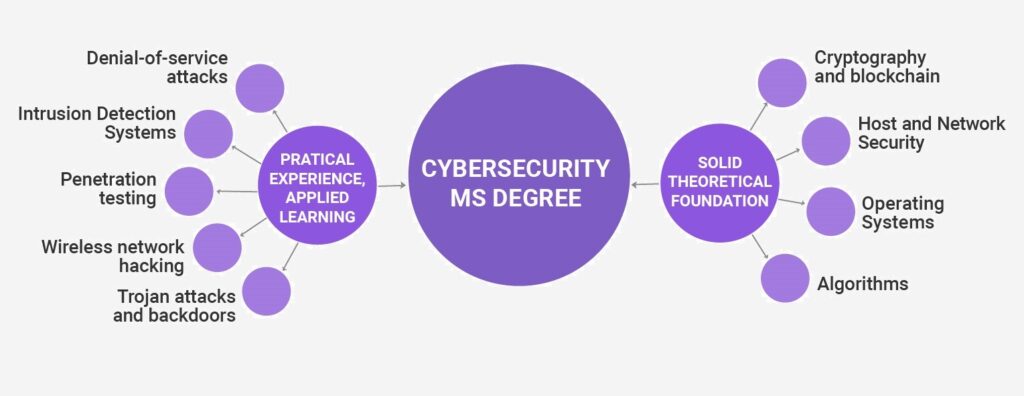
A master’s in cybersecurity is worth it depending on your career stage and goals.
It is worth it if:
- You want to move into management or leadership roles
- You already have some experience in IT or cybersecurity
- You want to specialize in areas like GRC, cloud security, or security architecture
- You are thinking long-term about career growth and salary
It may not be worth it if:
- You are just starting out in cybersecurity
- You want to get a job quickly
- You have limited budget
- You need hands-on skills more than academic knowledge
The biggest mistake people make is choosing a master’s degree when they actually need experience.
Salary Potential: How Much Can You Earn?
Cybersecurity professionals earn some of the highest salaries in tech, especially at senior levels.
- Information Security Analysts earn around $120,000+ on average
- Senior roles like Security Managers or Architects can exceed $150,000–$200,000
- Leadership roles, such as CISOs can earn significantly more depending on the organization
A master’s degree does not guarantee a high salary, but it can position you for roles that pay more over time.
Master’s vs Certifications: Which Is Better?
This is where most people get confused.
Certifications are better if:
- You want to enter cybersecurity quickly
- You need practical, job-ready skills
- You are switching careers
Examples include:
- Security+
- CISSP
- CISM
- CEH
A master’s degree is better if:
- You are aiming for leadership roles
- You want long-term career growth
- You already have experience and want to level up
The best approach:
Many successful professionals combine both:
- Start with certifications → get experience
- Then pursue a master’s → move into higher roles
READ MORE: How to Become a GRC Analyst?
Cost and ROI: Is It Financially Worth It?
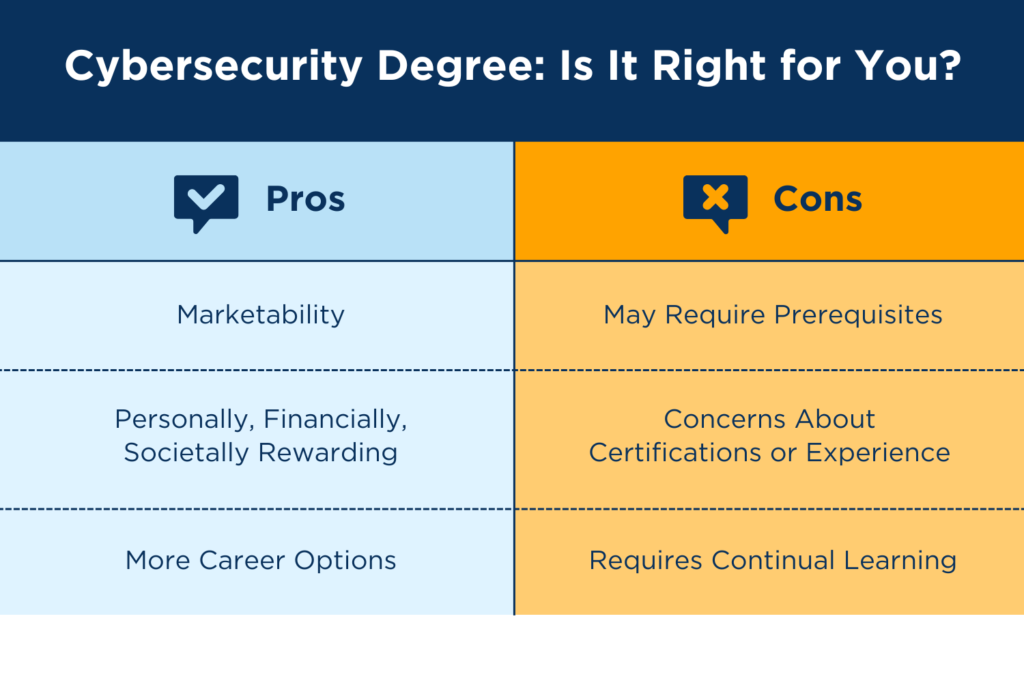
A master’s in cybersecurity can cost anywhere from $20,000 to $70,000 depending on the school.
Here’s how to think about ROI:
High ROI if:
- You move into a higher-paying role after graduation
- You transition into leadership
- You stay in the field long-term
Low ROI if:
- You delay entering the workforce
- You don’t gain practical experience
- You choose a program without industry relevance
A key advantage is that a master’s is a one-time investment, while many certifications require renewal over time.
Career Paths You Can Unlock
A master’s degree can help you move into roles like:
- Security Architect
- Cybersecurity Manager
- Risk and Compliance (GRC) Analyst
- Security Consultant
- Chief Information Security Officer (CISO)
These roles focus more on decision-making, strategy, and leadership rather than just technical execution.
SEE ALSO: The ExcelMindCyber Institute: Why Professionals Keep Joining?
When a Master’s in Cybersecurity Is NOT Worth It
This is where most articles fail, but this is what you need to know.
A master’s is not worth it if:
- You have zero experience and expect it to get you a job immediately
- You are trying to switch careers quickly
- You cannot afford the financial or time commitment
- You are not interested in leadership or advanced roles
In these cases, certifications and practical experience will give better results faster.
The Best Path Based on Your Situation
If you are a beginner:
Start with certifications and hands-on learning. Focus on getting your first job before thinking about a master’s.
If you are switching careers:
Build practical skills first. A master’s can come later when you are ready to move up.
If you already work in IT or cybersecurity:
A master’s degree can help you move into higher-paying and leadership roles faster.
Conclusion
A master’s in cybersecurity is not a shortcut into the industry. It is a tool for long-term growth.
If your goal is to move faster, certifications and practical training programs can help you get into the field quicker and start gaining real experience.
If your goal is to grow into leadership roles over time, a master’s degree can become a strong advantage later in your career.
The smartest approach for many people today is to focus on getting into the industry first, building experience, and then deciding if a master’s degree is necessary for the next level.
FAQ
Is a master’s degree the fastest way to start a cybersecurity career?
No, a master’s degree is not the fastest way to start a cybersecurity career. Most programs take 1 to 2 years to complete, and they often focus more on theory than hands-on job skills.
For beginners or career switchers, practical training programs and certifications can provide a faster path into the industry. Some structured programs focus on helping learners gain real-world experience and start applying for jobs within a few months.
What is the fastest way to get into cybersecurity without a degree?
The fastest way to get into cybersecurity is to focus on practical skills, certifications, and real-world experience instead of spending years on a degree.
Many people start with entry-level certifications and hands-on training programs that teach job-ready skills, help build a portfolio, and support job applications. This approach can significantly reduce the time it takes to start working in the field.
Can you get a cybersecurity job without a master’s degree?
Yes, you can get a cybersecurity job without a master’s degree. Many professionals enter the field through certifications, practical training, and hands-on experience.
Employers often prioritize skills and experience over academic qualifications, especially for entry-level and mid-level roles. A master’s degree becomes more valuable later when moving into leadership or specialized positions.
Are there alternatives to a master’s degree in cybersecurity?
Yes, there are alternatives to a master’s degree in cybersecurity. Certifications, bootcamps, and structured training programs can help you gain job-ready skills in a shorter time.
Some programs focus on practical experience, portfolio building, and job placement support, making them a more direct path into the industry for beginners or career switchers.
A master’s degree is more useful later for career advancement, while these alternatives are designed to help you get started faster.