
 English
 Arabic
 English
 French
 German
Phishing Course for Professionals: Command Senior Roles
You know phishing is dangerous. Most cybersecurity professionals do. But knowing about phishing and truly mastering it are very different things.
A phishing course for professionals teaches you more than just red flags. It shows you how attacks actually work. It shows you how to stop them. And it shows you how to build programs that protect whole organizations. By the end of this article, you will understand phishing well enough to lead in any security role. That is what separates true professionals from beginners. That is what gets you hired, promoted, and respected.
Table of Contents
What Phishing Is (And Why It Helps Your Career)
Phishing is when an attacker tricks you with a fake message. The message looks real, but it is not. The attacker wants you to give up information, click a bad link, download malware, or enter your login details into a fake website.
On the surface, this seems simple. But phishing is more than just a trick. It uses psychology, technology, and understanding of how organizations work. That is why learning it well is not just a safety skill. It is a real career advantage.
The Three Main Types of Phishing
Email Phishing. This is the most common. A fake email pretends to come from someone you trust, your bank, your boss, a vendor. It uses fear or urgency to make you act fast without thinking.
Text and Voice Phishing. These are growing faster than email phishing. Text phishing (called “smishing”) sends you a fake link via text. Voice phishing (called “vishing”) is when an attacker calls you pretending to be from your bank. These feel personal and are hard to ignore.
Multi-Channel Attacks. Attackers do not stop at one message. They send an email, then a text, then a call. Each message makes the fake story seem more real. Understanding the pattern matters more than just knowing red flags.
Why Every Cybersecurity Professional Needs to Understand Phishing
Here is the simple truth: phishing expertise is rare. And it is valuable.
Phishing is how 41% of data breaches happen. It is how attackers get ransomware in. It is how they steal passwords and data. Almost every security job involves phishing. You might stop attacks as an analyst. You might investigate breaches. You might design training programs. You might make security decisions as a leader.
Professionals who advance fast are the ones who understand phishing deeply. They see patterns others miss. They move from just stopping attacks to designing programs that prevent many attacks at once. They explain risk in language that executives understand. They move from “security professional” to “security leader.”
Most professionals never get there. They learn red flags and stay there. The ones who advance take a structured phishing course for professionals. They master three levels: awareness, technical knowledge, and organizational thinking. These are the people who get hired by top companies. These are the people who lead teams.
How Phishing Knowledge Leads to Career Growth
Here is how phishing knowledge helps cybersecurity careers:
Entry-Level: Security Analyst or SOC Analyst roles need you to understand phishing. You look at alerts. You analyze suspicious emails. You respond to incidents. Professionals who master phishing here move up faster. (Similar to how GRC Analysts start with risk knowledge and build toward leadership.)
Mid-Level: Security Engineer or GRC (Governance, Risk, Compliance) roles need technical and organizational phishing knowledge. You design defenses. You build training programs. You measure if they work. You are not just responding to attacks anymore. You are preventing them.
Senior Level: Security Architect, GRC Manager, or CISO roles need mastery of all three levels. You make strategy decisions. You explain risks to the board. You design programs that work. You lead teams.
Professionals who combine all three skills are rare. And they are the ones who get promoted, lead teams, and earn top salaries. This is the power of mastering a phishing course for professionals, it opens doors to advancement.
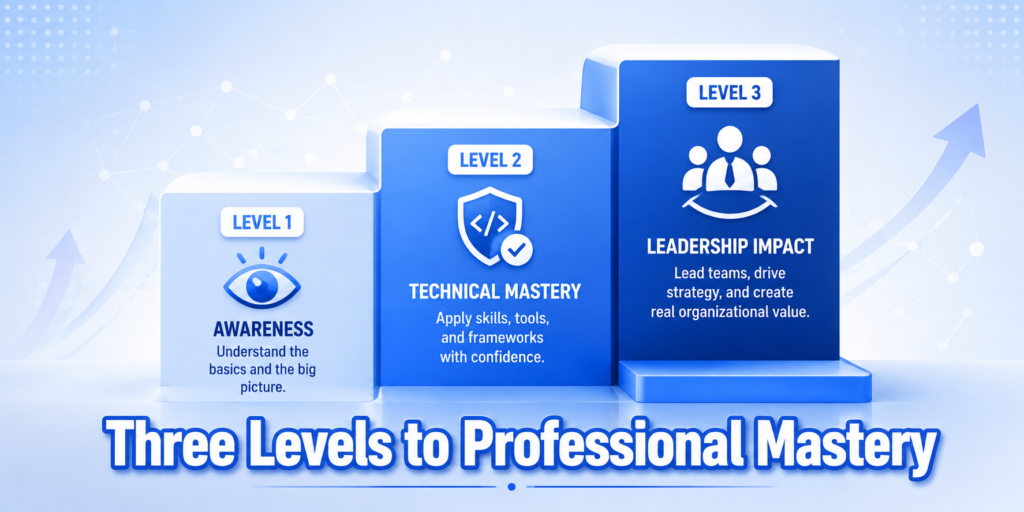
Level 1: Phishing Awareness (What Every Employee Should Know)
Phishing awareness is the foundation. At this level, you learn to spot suspicious messages fast and report them. Most free phishing courses teach this and stop. But it does not have to be shallow.
Red Flags Every Person Should Notice
Real phishing emails have signs. None are perfect on their own, but together they tell you something is wrong.
Urgent language is the first sign. “Verify your account now or it will be closed.” “Urgent: suspicious activity detected.” Real companies do not rush you. They know you will call them if you are worried.
Unexpected requests are another red flag. Your bank does not ask you to confirm your password by email. Your IT department does not ask you to re-enter your login details. If someone asks for sensitive information out of nowhere, pause.
Check the sender address closely. A fake email might say it is from “Apple Support,” but the real sender address is “applesupport@mailserver.shop” or something similar. Click the sender name to see the real address.
Be careful with links and attachments. Hover over a link before you click to see where it actually goes. Many phishing emails say “Click here to confirm” but link to a bad site. Attachments from people you do not know are almost always risky.
Real Example: Reading a Phishing Email (Beginner Level)
Imagine you get this email:
From: noreply@yourbank.com Subject: Urgent: Confirm Your Account Information
Dear Valued Customer,
We found suspicious activity on your account. Click below to verify who you are and secure your account now.
[CONFIRM YOUR ACCOUNT]
If you do not act in 24 hours, your account will be frozen.
Your Bank
As a beginner, here is what you notice. The email says “Urgent” and “now” and “24 hours.” It warns you that your account will freeze. It asks you to click and give personal information. The sender says it is your bank, but something feels off.
The answer at this level is simple. Do not click. Do not reply. Instead, open your bank’s app directly or call the number on the back of your card. Ask them if they sent this email. They almost certainly did not.
This is Level 1 awareness. And it works. Most phishing attacks fail because people simply do not click.
What to Do If You Clicked a Phishing Email
If you clicked a bad link or entered information you should not have, act fast.
Change your password right away, especially if you typed it in. Use a password manager to create a long, unique password. Make sure it is nothing like your old password.
Call the real organization. If you think you were phished about your bank, call your bank directly. Tell them you may have given away your password. They can watch your account and freeze it if needed.
Watch for fraud. Phishing often leads to identity theft or fraud. Check your bank and credit card statements often. If you gave away sensitive information (like your social security number or full name), consider putting a fraud alert with the credit bureaus.
Report it. Most email services have a report phishing button. Use it. Your report helps protect other people.
Level 2: Technical Phishing Mastery (For Security Professionals)
Level 2 is where phishing becomes a technical discipline. You stop just knowing what phishing is. You understand how attackers build it. You understand what security tools can catch it.
How Attackers Actually Build Phishing (The Technical Side)
A professional phishing attack has stages. Understanding these stages is how defenders get ahead.
Research. The attacker finds out about their target. They learn employee names, job titles, company structure. They find public information on social media or company websites. This research makes the phishing email feel real.
Building the message. The attacker creates a fake email or website that looks like the real one. They might copy an entire login page, pixel perfect. Modern attackers use AI to write convincing messages and even create fake images. The message is built to trigger emotion, usually fear or urgency.
Setting up the attack. The attacker registers a domain name that looks similar to the real one. “yourbank.com” becomes “yourbanks.com” or “your-bank.com.” They set up email servers to send the phishing message to thousands of people. They configure everything to capture passwords when victims type them in.
Sending the attack. The phishing emails go out. Thousands are sent. The attacker waits for responses. Each click and each password is captured and logged.
Exploiting the access. Once the attacker has passwords or is inside the network, they move around. They install malware. They steal data. Or they sell the access to someone else.
This is why just teaching people “do not click” is incomplete. At the professional level, you need to know that phishing is not one attack. It is a sequence. Defenders can stop it at many points.
Real Example: Looking at the SAME Email (Technical Level)
Remember that email from before? “Urgent: Confirm Your Account Information.” At the professional level, you analyze it completely differently.
You check the sender address headers. The email claims to come from “noreply@yourbank.com,” but the real header shows it came from “mail.attacker.ru.” That is not an accident. That is evidence.
You analyze the link. Beginners see the button and think “do not click.” Professionals right-click and copy the link address. They see it goes to “yourbank-verify.com,” a domain registered yesterday. They check the DNS records and see the website is on a shared server used for hundreds of phishing attacks.
You check email signatures. Real banks use DKIM, SPF, or DMARC authentication. Phishing emails often do not because they are not from real mail servers. You check if the email passed these checks.
You analyze the content carefully. Real banks use consistent branding, specific language, and good grammar. Phishing emails often have small spelling mistakes (“Confirm” instead of “Verify”), awkward phrasing, or generic greetings. AI is making this harder, but patterns still appear.
You think about the attack infrastructure. Why did the attacker choose this domain? Why this phrasing? What are they trying to capture? Understanding the attacker’s goal tells you how to defend.
At this level, you see the same email completely differently. You are not just avoiding the trap. You are understanding how the trap builder thinks, finding patterns, and designing ways to block this attack and others like it at scale.
Defense Technology That Actually Works
Organizations use several tools to stop phishing at the technical level.
Email filtering. Modern email systems look at incoming messages for known phishing patterns. They check sender authentication. They scan for bad URLs and attachments. They flag suspicious messages before they reach users.
URL reputation services. When someone clicks a link, a service checks if that link is known to be bad. If it is, the browser blocks it or warns the user.
Password managers. When users have unique passwords in a password manager, phishing is less effective. Even if they enter their password on a fake site, the password does not work on the real site.
Multi-factor authentication (MFA). If an attacker steals a password via phishing, MFA stops them. They cannot log in without the second factor (a text code, a hardware key, or a fingerprint). This is one of the most effective defenses.
Behavior analytics. This tool watches for abnormal behavior. If an account suddenly logs in from a new country at 3 a.m., it flags it. If a user suddenly downloads thousands of files, it notices. These tools catch compromised accounts after phishing works.
How to Spot Phishing: What Security Tools Look For
Security professionals use tools to find phishing campaigns before they hit users. These tools look for patterns that signal a phishing attack.
Domain similarity tools find new domains that look like real ones. If “yourbank.com” exists and someone creates “yourbanks.com,” the tool finds it.
Email gateway solutions scan incoming messages for phishing signs. They check sender authentication. They analyze link reputation. They scan for malware. They look for suspicious patterns in the message body.
OSINT (Open Source Intelligence) tools help professionals find phishing domains and emails targeting their organization. They scan public records, leaked databases, and dark web markets for mentions of your company.
The professionals who advance fastest understand both the attack side and the defense side. They see how attackers move. They design defenses accordingly. That is Level 2 mastery.
Level 3: Organizational Training & Leadership (Managing Phishing Programs)
Level 3 is where phishing knowledge becomes organizational power. You design training programs. You measure if they work. You build a culture where phishing attacks fail.
Real Example: The SAME Email (Organizational Level)
Remember that phishing email? At Level 3, your analysis is about organizational impact.
When this email lands in an organization, what happens? You want to know: How many people got it? How many clicked? How many entered passwords? How many reported it? How many fell for it, and what happened?
You set up metrics to track these answers. You run a phishing simulation ; a safe test using fake phishing emails, to see how your organization actually responds. You measure “report rate” (what percentage reported the email) and “time-to-report” (how fast they reported it).
You analyze by department. Does finance fall for this more than IT? Do new employees click more than veterans? These patterns tell you where to focus training.
You track repeat offenders. Some people click every simulated email. Others never do. The ones who click repeat need targeted help. Others need reinforcement to stay sharp.
Most importantly, you measure behavior change over time. If your report rate is 2% in month one and 14% in month six, that is proof your training works. People are changing how they act. That is Level 3 thinking.
Building Training Programs That Actually Change How People Act
Most organizations get this wrong. Everyone completes training, and then they declare victory. Then phishing attacks still happen.
The problem is that finishing training does not equal behavior change. You need a different approach.
Make it real. Use simulated phishing emails that look like real attacks your organization faces. Generic training is forgotten fast. Training using fake emails that actually target your company sticks.
Make it regular. Annual training does not work. People forget. Run short, focused training often instead. Some organizations do this monthly. New employees train right away. High-risk departments get more training. People who fall for simulations get instant feedback.
Make it emotional. Phishing works because it triggers emotion. Your training should too. Help people understand why they clicked. What emotion did the email trigger? Fear? Urgency? Authority? Once they understand the pattern, they spot it in real attacks.
Connect it to real risk. People care about behavior change when they understand the stakes. Show an employee that phishing led to a real breach in your company, or a similar company. They pay attention.
Make reporting easy. You want people to report phishing instead of deleting it. Put a “Report Phishing” button right in their email. Make it one click. Confirm they sent it.
Follow up on reports. When someone reports phishing, analyze it. If it is real, thank them publicly. Let people see that reporting matters. If it is not phishing, explain why. Use it as a teaching moment.
The strongest organizations do all of this together. They do not just train. They build a culture where phishing fails.
Metrics That Actually Matter
Most organizations track the wrong metrics. They count “completion rate” (did people finish training) or “click rate” (what percentage clicked a fake email). These metrics tell you nothing useful.
Report rate is what matters. What percentage of employees report suspicious emails? If your rate is below 5%, most phishing is going undetected. Your goal should be 20%+ within six months. That means phishing emails are reaching your mailbox, but someone reported them before they caused damage.
Time-to-report is next. How fast do people report phishing after they spot it? Faster is better. If someone reports in 30 minutes, the attacker has less time to exploit stolen passwords. If reporting takes hours, damage spreads.
Behavior change is the ultimate metric. Are people changing how they handle suspicious messages? You measure this through fake phishing tests over time. If your click rate drops from 30% to 10% over six months, behavior is changing.
Incident cost reduction is the business metric. If phishing used to cost $500K per incident to respond to and fix, and it now costs $50K, your training works. This is the number that matters to executives.
Phishing Leadership as a Career Path
Here is the career fact: people who understand phishing deeply, from awareness through technical knowledge through organizational impact, move into senior security roles.
They become security awareness leaders, designing programs across entire organizations. They become incident response leads, managing what happens when attacks succeed. They become CISO (Chief Information Security Officer) candidates, because they understand human risk as well as technical risk.
Professionals who combine Level 1, Level 2, and Level 3 are rare. And they are well-paid. This is not just a skill. This is a career differentiator.
Choosing Your Learning Path: Free vs. Paid vs. Structured Programs
Now you understand the three levels. The question is: how do you learn them?
Free Phishing Courses (What They Do Well, What They Miss)
Free resources are real. CISA, Be Connected, and Indiana University all offer legitimate free phishing awareness training. They teach Level 1 well. They show red flags. They explain what to do if you fall for phishing.
What free courses miss is progression. They teach red flags, then stop. They do not connect awareness to technical knowledge or organizational thinking. They do not position phishing as a career topic. If you want just the basics, free works. If you want to advance, free is not enough.
Free courses also assume you will figure out the rest yourself. No one is guiding you. No one is telling you what to learn next. You are on your own.
Paid Online Courses (Udemy, Simply Cyber, TCM) : Strengths and Gaps
Udemy’s “Cyber Security: Phishing” covers both attack and defense. Simply Cyber’s “Hands-On Phishing” teaches red-team techniques for professionals. TCM Security’s course goes deep into how to build phishing infrastructure.
These courses have two strengths. First, they are structured. You follow a path. Second, they have depth. You learn more than basic red flags.
But they have a gap: they do not usually connect all three levels. Udemy teaches both sides but does not frame it as “awareness → professional → leadership.” Simply Cyber and TCM focus on offense. They assume you already know defense.
Most people taking these courses learn alone. There is no organization, no simulations specific to your company, no peer support.
Organizational Training Platforms (Keepnet, Infosec IQ) : For Companies, Not Individuals
Platforms like Keepnet and Infosec IQ are built for organizations, not individuals. They manage training at scale, run simulated phishing campaigns, and track metrics.
If you work at a company, your company might give you access. You get structured training, organizational context, and peer participation. But these platforms are expensive. Small companies and individuals cannot afford them.
If you are learning on your own, these platforms are not an option.
Structured Professional Programs : The Middle Ground
There is a gap between “free red-flag training” and “expensive organizational platforms.” That gap is structured professional programs that teach all three levels, with hands-on practice and career guidance.
A good structured program covers Level 1 awareness (so you understand what beginners face), Level 2 technical depth (so you understand how attacks work), and Level 3 organizational thinking (so you can design and lead programs). It includes hands-on labs, simulations, and real-world projects. It connects phishing to broader cybersecurity careers.
This is where many professionals actually make their breakthrough. They get guidance, progression, and context that self-study does not provide.
Phishing Professional Opportunities in Nigeria and Africa
For cybersecurity professionals in Nigeria and Africa, phishing expertise is a clear path to advancement and better compensation.
Professional roles and what they pay:
Entry-level Security Awareness Coordinator or Compliance Officer roles typically start at ₦3-5M annually in Nigeria. These professionals handle phishing training delivery and basic incident response.
Mid-level professionals (Security Awareness Manager, GRC Specialist, Incident Response Analyst) earn ₦8-15M. These professionals design training programs, manage simulations, analyze phishing campaigns, and lead response efforts.
Senior roles (Security Manager, GRC Manager, Incident Response Lead) reach ₦15-25M+ depending on company size and industry. These professionals lead teams, design organizational strategies, and report to executives.
Remote and international opportunities:
The fastest-growing opportunity is remote work for international companies. Nigerian and African professionals are increasingly hired to design phishing programs, conduct research, and lead incident response for global organizations. Remote security professional roles often pay $3,000-7,000+ monthly for mid-level professionals, and significantly more for senior roles.
The professional advantage:
Professionals advancing fastest combine three skills: they understand phishing awareness (like Level 1), they understand technical phishing attacks (like Level 2), and they can design organizational programs that work (like Level 3).
This progression is similar to the step-by-step roadmap that works for any cybersecurity career, foundational knowledge first, technical depth second, organizational leadership third. Professionals who master this progression advance into senior roles.
Banks, fintech companies, telecommunications, government agencies, and enterprises across Nigeria all need phishing professionals. As regulatory requirements tighten (NITDA, CBN guidelines, NDPR compliance), organizations are investing heavily in people who can reduce human risk.
The fastest path to these roles is structured learning that covers all three levels. Self-study takes years. A focused phishing course for professionals accelerates the process.
Your 90-Day Professional Advancement Plan
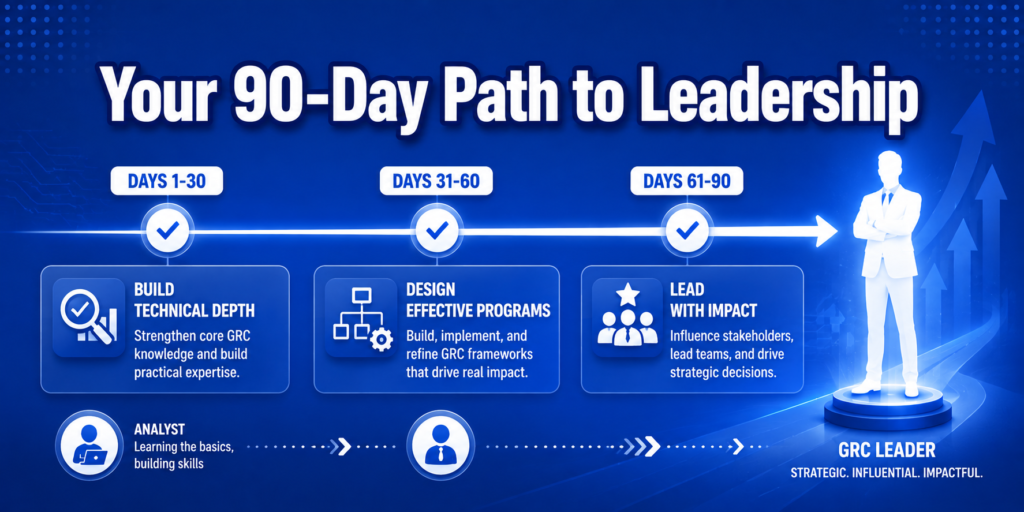
If you are already working in cybersecurity and want to advance into senior phishing and security awareness roles, here is a focused 90-day plan.
Days 1-30: Technical Depth (If You Lack It).
Week 1-2: If you do not already understand technical phishing attacks, take a technical phishing course. Learn how attackers set up infrastructure (email servers, domain registration, link shorteners). Understand MFA bypass tactics. Study real attack infrastructure.
Week 3: Analyze real-world phishing campaigns. Join security research communities (Reddit r/cybersecurity, professional Slack groups, security forums). Analyze public reports of phishing attacks. Understand what security tools missed.
Week 4: Set up a lab and execute a phishing simulation (in a controlled, authorized environment). Deploy a test infrastructure. Understand the attacker’s perspective. This knowledge makes you a better defender.
Days 31-60: Organizational Program Design.
Week 5-6: Study how mature organizations run phishing programs. Read security awareness reports (Gartner, Verizon). Understand metrics. Review open-source training materials from CISA, SANS, and similar organizations.
Week 7: Design a complete phishing program for a real organization (could be your current employer, a case study, or a hypothetical). Cover: awareness training content, simulated phishing strategy, metrics to track, remediation process, executive reporting.
Week 8: Build a portfolio case study. Document a phishing program you designed (or would design). Show the problem, your approach, the metrics you would track, and the expected outcomes. This becomes your professional proof.
Days 61-90: Leadership and Specialization.
Week 9-10: Identify your specialization. Will you focus on incident response? Training program design? Security architecture? Threat intelligence? Choose one path and deepen your knowledge there.
Week 11: Build your professional brand. Write a blog post, contribute to a security forum, or speak at a local meetup about phishing. Professionals with visibility get better opportunities.
Week 12: Apply for advancement. Use your portfolio, your case studies, and your knowledge to pursue senior roles. Security Awareness Manager, GRC Manager, Incident Response Lead, or Security Engineer positions all value deep phishing expertise.
By day 90, you have technical depth, organizational thinking, a portfolio case study, and a professional brand. You are ready for senior-level opportunities.
Pro tip: If you interview for these senior roles, prepare for technical questions about phishing infrastructure and organizational questions about program design. Understanding what interviewers are actually testing will help you anticipate their approach.
Final Thoughts: Your Professional Advantage Starts Now
Phishing is not going away. AI is making phishing easier, not harder. Deepfakes are making emails more convincing. Attackers are getting smarter. That means phishing skills are only becoming more valuable.
Professionals who master phishing at all three levels are the ones who move into senior roles. They lead incident response teams. They design security architecture. They advise boards. They earn top salaries.
Right now, you have a choice. You can keep learning phishing in pieces: a free course here, a book there, putting it together on your own. You will eventually learn. But it will take years, and you will have gaps.
Or you can accelerate.
A structured phishing course for professionals gives you what self-study does not: progression, technical depth, real-world labs, and career guidance. You learn not just what phishing is, but how to use that knowledge to advance.
EMC Institute’s cybersecurity training programs are built around this exact progression. You get professional phishing mastery, awareness, technical defense, and organizational leadership, all connected. You get structured learning that matches how careers actually develop: foundation first, then specialization, then leadership.
Join the free VSL (Video Sales Letter) to see exactly how the program works and which path fits your career right now. See how other professionals used structured training to move into senior roles. See if this is the acceleration you need.
Your career in cybersecurity is what you make it. Phishing mastery is one of the fastest ways to make it count.
Where can I find a phishing training course?
You have several options. Free courses are available from CISA, Be Connected, and Indiana University if you want basics only. Paid online courses like Udemy and Simply Cyber teach both attack and defense perspectives for reasonable prices. If you want structured professional training that covers all three levels (awareness, technical, and organizational leadership), look for cybersecurity training institutes that specialize in phishing mastery. Many organizations also offer in-house training to employees. Choose based on your current level and career goals. Beginners should start with free or paid online courses. Professionals looking to advance should invest in structured programs with hands-on labs and career guidance.
How to study phishing?
Start with the fundamentals. First, learn to recognize red flags in phishing emails (sender address, urgent language, unexpected requests, suspicious links). Second, understand how attackers actually build phishing campaigns (domain registration, email infrastructure, credential capture). Third, study how organizations defend against phishing (email filtering, multi-factor authentication, user behavior analytics). Use multiple methods: read articles and books, watch video tutorials, practice with simulated phishing tests, and if possible, set up a lab environment to analyze real phishing techniques. Join security communities online to discuss attacks and defenses. The key is to learn at your own pace but consistently. Spend at least 1-2 hours per week on phishing education for several months to build real expertise.
How much does cybersecurity training cost in Nigeria?
Entry-level cybersecurity courses range from ₦0 (free government and university resources) to ₦50,000-150,000 for individual online courses. Professional certification programs typically cost ₦200,000-500,000+ depending on the provider and depth of training. Premium structured programs that combine multiple levels of phishing and security training can reach ₦500,000-1,000,000+. Many international companies offer remote cybersecurity training at prices comparable to Nigeria but paid in international rates (₦500,000-2,000,000+ annually for professional programs). Your choice depends on your budget and career stage. If you are just starting, begin with free resources. If you are working in security and want to advance, invest in structured professional training. The cost typically pays for itself quickly through career advancement and salary increases.
Where can I find free phishing training?
Free phishing training is available from several trusted sources. CISA (Cybersecurity and Infrastructure Security Agency) offers free resources for US and international audiences. Be Connected is an Australian government resource available globally and teaches phishing basics for free. Indiana University offers phishing education programs. Many YouTube channels teach phishing fundamentals for free. Your organization might also provide free training if you work in a company with a security awareness program. However, free training usually covers only basic awareness (Level 1). It does not include technical depth or organizational leadership training. Free resources are great for starting, but if you want to advance professionally, you will eventually need paid training with hands-on labs and structured progression.
Can I learn phishing and advance into a senior role in 90 days?
Yes, if you already work in cybersecurity or have some technical foundation. Our 90-day professional advancement plan focuses on professionals who want to specialize in phishing and move into senior roles. The plan is: (1) build technical depth in weeks 1-4, (2) design organizational programs in weeks 5-8, (3) build your professional brand and apply for senior roles in weeks 9-12. By day 90, you will have technical knowledge, a portfolio case study, and professional visibility. However, 90 days is an acceleration plan, not a complete mastery plan. You will have enough knowledge to move into mid-level or junior senior roles. Continued learning and real-world experience will deepen your expertise over the following year or two. If you are starting from zero (no cybersecurity background), expect 6-12 months of consistent learning before you are ready for senior roles