
 English
 Arabic
 English
 French
 German
GRC Roadmap: Build a Career That Actually Pays
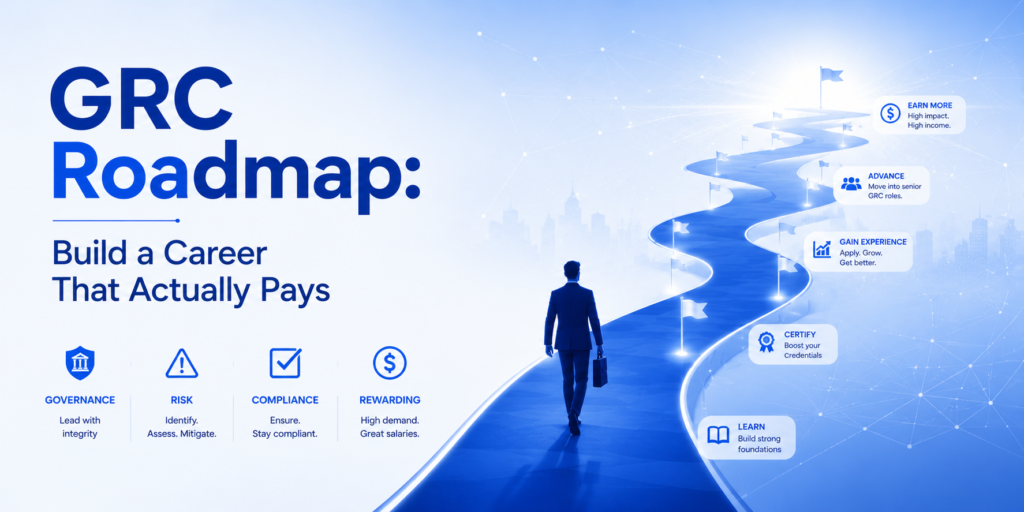
Most people researching a GRC career hit the same wall. They find a list of a dozen certifications, no clear order, no timeline, and no sense of what actually matters first. This article fixes that. It lays out a real GRC career roadmap in plain stages, with realistic timeframes, so you know exactly what to do this month, not just someday.
What a Real GRC Roadmap Looks Like
A working GRC roadmap for beginners has four stages: foundational knowledge, hands-on practice, intermediate certification and specialization, and advanced career positioning. Each stage builds on the one before it, and skipping ahead usually costs more time than it saves.
Why Most Roadmaps Overwhelm Beginners
Most GRC roadmaps fail beginners because they present every possible certification at once, from entry-level credentials to executive-track qualifications, with no sense of sequence. Seeing a dozen options with no order feels like standing at a buffet with no plate. A real roadmap tells you what to eat first.
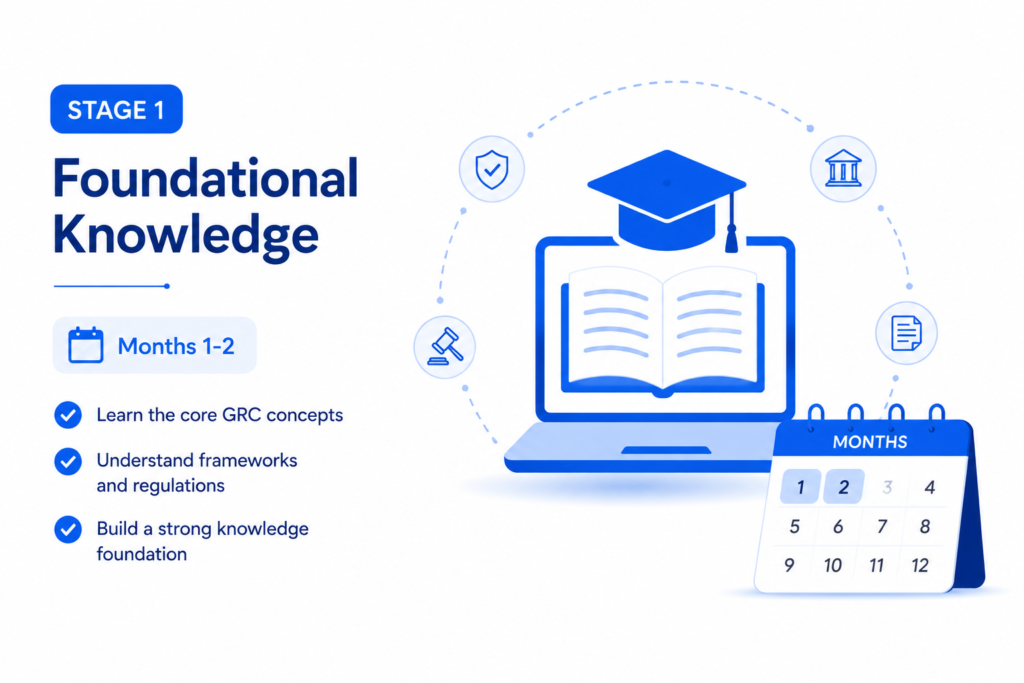
Stage 1: Foundational Knowledge (Months 1-2)
What to Learn First
Start with core security and risk concepts before touching any GRC-specific framework. You need to understand basic cybersecurity principles, what a risk actually is, and how organizations think about compliance before any certification will make sense.
Your First Certification Milestone
CompTIA Security+ works well as a first certification milestone. It’s vendor-neutral, widely recognized, and builds the foundational vocabulary every later stage depends on. Budget six to eight weeks of steady study if you’re starting from zero.
Stage 2: Building Practical Experience (Months 2-4)
Hands-On Practice That Actually Counts
Certifications prove you know concepts. Practical experience proves you can apply them. Volunteer to run a basic risk assessment for a small business, a nonprofit, or even a friend’s company. Document what you found, how you prioritized it, and what you recommended. This single exercise gives you something real to discuss in an interview, which most entry-level candidates cannot offer.
Documenting Your Progress
Keep a simple portfolio of everything you produce during this stage: sample policies you’ve written, mock risk registers, notes from practice audits. This becomes your proof of capability when your resume still shows limited formal experience.
Stage 3: Intermediate Certifications and Specialization (Months 4-8)
Choosing Your Certification Path
Once you have foundational knowledge and some hands-on practice, choose a certification path that matches your target role. If you’re aiming for a Compliance Analyst or Risk Analyst track, look at credentials built specifically for GRC professionals from a recognized certification authority in the field. These carry more weight with employers than generic security certifications at this stage.
Common Mistakes at This Stage
The most common mistake here is collecting certifications without direction, chasing every credential that looks impressive rather than the ones that match your actual target role. Pick one intermediate certification, finish it, and apply what you learned before starting another.
Stage 4: Advanced Growth and Career Positioning (Months 8+)
Leadership-Track Certifications
As you move toward senior GRC roles, leadership-track certifications become relevant, credentials that validate risk management expertise at an organizational level rather than task-level execution. These typically require prior experience, so this stage assumes you’ve already spent real time working in the field.
Positioning Yourself for Senior Roles
Senior positioning comes from demonstrated impact, not just credentials. Track measurable outcomes from your work: audits you helped pass, risks you helped mitigate, policies you helped implement. These become the proof points that move you from analyst-level titles into management-track conversations.
DIY Roadmap vs. Structured Training: A Realistic Comparison
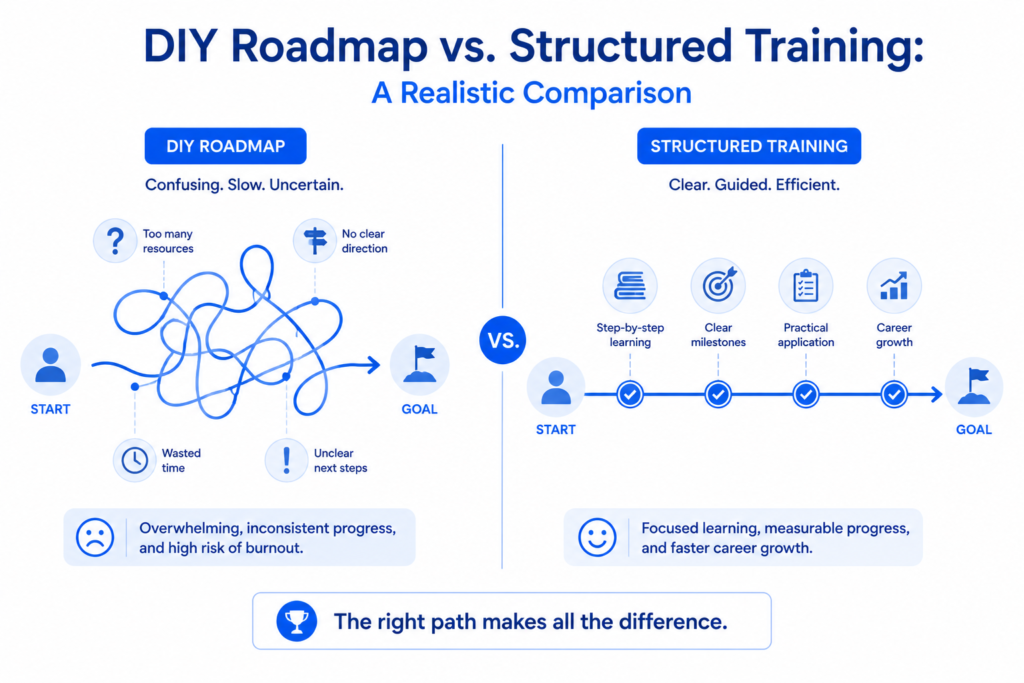
Following this GRC training roadmap alone is entirely possible, but it typically takes committed learners twelve months or longer, largely because piecing together free resources, figuring out which certification actually matters, and finding real practice opportunities all take significant trial and error.
A structured training program compresses that same roadmap into a guided timeline, with practical exercises, mentorship, and a clear sequence already mapped out for you. This doesn’t replace the roadmap, it’s the same roadmap, just without the guesswork and wasted months.
A Sample 90-Day Starting Plan
Days 1-30: Build foundational security and risk knowledge, begin studying for your first certification. Days 31-60: Complete your first certification, start a hands-on practice project like a mock risk assessment. Days 61-90: Finish documenting your practice project, research and select your intermediate certification path, and begin applying for entry-level GRC roles even before you feel fully ready.
Final Thoughts: Turning This Roadmap Into Action
This step by step GRC guide only works if you actually follow it in order. The biggest risk isn’t picking the wrong certification, it’s staying stuck in research mode for months without taking the first concrete step.
If you’d rather skip the trial and error of building this roadmap alone, EMC Institute’s cybersecurity training programs are built around this exact sequence, foundational knowledge, hands-on practice, and certification guidance, with structured support at every stage. Watch a quick walkthrough of how the program works to see if it fits where you are right now.
How do I start a career in GRC?
Start by building foundational knowledge in cybersecurity and risk concepts, then earn a beginner certification like CompTIA Security+. Follow that with hands-on practice, even a volunteer risk assessment for a small business builds real, discussable experience. Apply for entry-level GRC or compliance analyst roles once you have both a certification and a practice project to show.
What are the three pillars of GRC?
Governance, risk, and compliance form the three pillars. Governance covers the policies and rules that guide how an organization operates. Risk management involves identifying and prioritizing potential threats. Compliance ensures the organization follows relevant laws and industry standards. Every GRC role blends these three areas in different proportions depending on the specific title.
Is GRC high paying?
GRC roles pay competitively, especially as you move from entry-level to intermediate and senior positions. Professionals with recognized certifications and hands-on experience, particularly those working with international clients or in regulated industries like banking and fintech, often earn significantly more than generalist IT roles at similar experience levels.
What is the GRC roadmap for cybersecurity?
The GRC roadmap for cybersecurity follows four stages: foundational knowledge, hands-on practice, intermediate certification and specialization, and advanced career positioning. Most learners move through foundational and practice stages within the first four months, then spend several more months building specialized certification and experience before qualifying for senior roles.
How long does it take to become job-ready in GRC?
Most committed learners become job-ready for entry-level GRC roles within six to eight months when following a structured path, foundational knowledge and certification in the first two months, hands-on practice in the following two, and intermediate specialization after that. A guided training program can often compress this timeline further.