
 English
 Arabic
 English
 French
 German
What Are Capture-the-Flag Competitions in Cybersecurity?
What Are Capture-the-Flag Competitions in Cybersecurity?
Capture-the-flag competitions in cybersecurity have moved from niche hacker events to mainstream training and hiring tools, and that shift is intentional. As cyber threats grow more complex, organizations increasingly value proof of practical skill over theoretical knowledge alone. CTF competitions provide that proof in a controlled, measurable way.
Unlike traditional courses or exams, a CTF competition places participants inside simulated environments that mirror real-world systems. They must identify weaknesses, analyze data, and solve problems under time pressure. This hands-on format reflects how cybersecurity work actually happens, making CTFs especially attractive to employers, educators, and learners.
Another reason CTFs are everywhere is accessibility. Many capture the flag cyber security free platforms allow beginners and professionals alike to practice without expensive tools or formal enrollment. Schools use them to teach fundamentals, companies use them to assess candidates, and professionals use them to stay current as attack techniques evolve.
The rise of remote work and cloud-based labs has also accelerated adoption. Today, anyone with an internet connection can participate in capture the flag cyber security training from anywhere in the world. As a result, CTFs have become a shared standard for learning, benchmarking, and discovering cybersecurity talent, explaining their rapid growth across the industry.

Start a Life-Changing Career in Cybersecurity Today
What Is a Flag in Cyber Security? (And What You’re Actually “Capturing”)
To understand what are capture-the-flag competitions in cybersecurity, it helps to first clarify a common point of confusion: what is a flag in cyber security? A flag is a small piece of digital information that proves a participant has successfully solved a security challenge.
In most CTF competitions, a flag appears as a short string of text, often in a standardized format such as FLAG{example_text}. This string is hidden behind a technical obstacle. Finding it confirms that the participant exploited a vulnerability, decoded protected data, or analyzed a system correctly.
Flags are not valuable because of what they contain, but because of how they are obtained. Each flag represents a completed task, such as gaining unauthorized access to a test system, decrypting a message, or extracting evidence from a forensic file. Once submitted, the flag is automatically validated and points are awarded.
This mechanism makes CTFs objective and measurable. Instead of grading opinions or theoretical explanations, competitions rely on clear technical outcomes. Either the flag is correct, or it is not. That clarity is one reason capture-the-flag competitions in cybersecurity are trusted by educators and employers alike.
In essence, the “flag” is a receipt. It proves not just that you understand a concept, but that you can apply it in a realistic, hands-on scenario.
How a CTF Competition Works (Step-by-Step)
While capture-the-flag competitions in cybersecurity can look complex from the outside, the underlying process follows a clear and repeatable structure. Understanding how a CTF competition works helps beginners know what to expect and allows experienced participants to prepare more effectively.
First, participants are given access to a controlled environment. This may be a website, a virtual machine, a network, or a full cyber range designed to simulate real systems. These environments are intentionally vulnerable and legally safe to test, removing the risks associated with real-world systems.
Next comes the challenge itself. Each task is designed around a specific security problem. Participants must analyze the system, identify weaknesses, and apply the appropriate technique to reach the hidden flag. This could involve inspecting source code, analyzing network traffic, decoding encrypted data, or exploiting a configuration flaw.
Once the flag is discovered, it is submitted through the competition’s scoring platform. The system verifies the flag and assigns points based on difficulty, speed, or both. Leaderboards update in real time, allowing individuals or teams to track their performance against others.
Most competitions run under time limits, which introduces pressure similar to real incident response scenarios. Participants must decide when to persist with a difficult challenge and when to move on. This balance of technical skill and strategic decision-making is a core reason why capture-the-flag competitions in cybersecurity are widely respected as realistic training tools.
Types of Capture-the-Flag Competitions in Cybersecurity

Capture-the-flag competitions in cybersecurity are not all designed the same way. Different formats exist to test different skill sets, learning objectives, and experience levels. Understanding these formats helps participants choose the right events for their goals and helps educators and employers apply CTFs more effectively.
Jeopardy-Style CTF Competitions
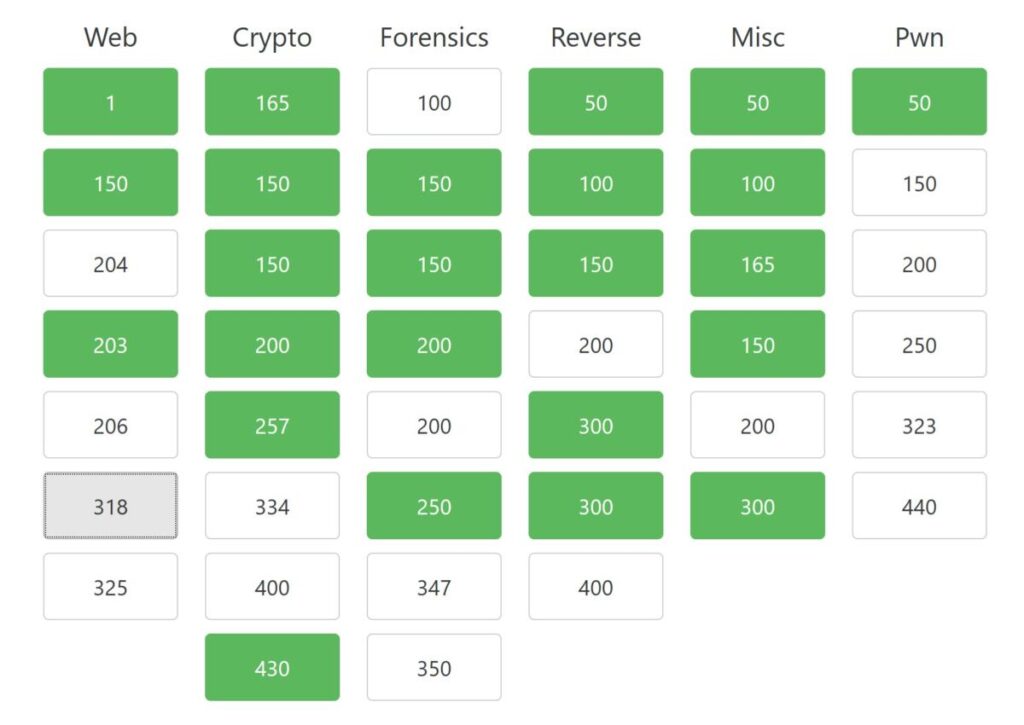
Jeopardy-style competitions are the most common and widely accessible format, especially for beginners. In this structure, participants solve a collection of independent challenges grouped into categories such as web security, cryptography, forensics, and reverse engineering.
Each challenge is worth a specific number of points based on difficulty. Solving one challenge unlocks a flag, which is submitted to earn points. Participants can choose which challenges to attempt and in what order, allowing flexibility and strategic planning.
This format works well for capture the flag cyber security for beginners because challenges scale in complexity and encourage broad exposure to multiple domains. It is also easier to host online, which explains its popularity on capture the flag cyber security free platforms.
Attack-Defense CTF Competitions
Attack-defense competitions are more complex and closely resemble real-world security operations. In this format, each team is given its own system or network to defend while simultaneously attempting to exploit the systems of other teams.
Participants must secure their infrastructure, monitor for intrusions, patch vulnerabilities, and respond to attacks in real time. At the same time, they are rewarded for successfully breaching opponents’ systems and extracting flags.
This format tests both offensive and defensive thinking and is commonly used in advanced competitions. While less beginner-friendly, it is highly valued in professional environments because it mirrors real incident response and adversarial behavior.
Hybrid and Mixed-Format Competitions
Some modern CTF events combine elements of both jeopardy-style and attack-defense formats. These hybrid competitions may start with individual challenges and progress into live defense scenarios, or run both formats simultaneously.
Hybrid formats are increasingly popular in structured capture the flag cyber security training programs because they offer balanced skill development. Participants build foundational knowledge first, then apply it in more dynamic, realistic situations.
As CTFs continue to evolve toward 2026 and beyond, mixed formats are expected to become more common, reflecting the growing demand for adaptable and well-rounded cybersecurity professionals.
RELATED: Footprinting Vs Fingerprinting in Cybersecurity: Complete 2026 Guide
Common CTF Challenge Categories (What Skills You’re Practicing)
Each capture-the-flag competition in cybersecurity is built around challenge categories that reflect real security tasks. These categories are designed to test specific skills that cybersecurity professionals use on the job. Together, they form a practical learning map for anyone progressing through capture the flag practice.
Web Security
Web security challenges focus on identifying and exploiting weaknesses in web applications. Participants may be asked to bypass authentication, manipulate user input, or analyze how a web application handles data.
These challenges build skills directly relevant to application security and penetration testing roles. They also help beginners understand how everyday websites can be compromised if security is poorly implemented.
Cryptography
Cryptography challenges require participants to analyze encrypted messages or flawed cryptographic implementations. The goal is often to decrypt data or uncover secret keys that reveal the flag.
This category strengthens understanding of encryption, hashing, and secure communication. It also teaches an important lesson: even strong algorithms can fail when implemented incorrectly.
Digital Forensics
Forensic challenges simulate investigations after a security incident. Participants analyze files, memory dumps, logs, or network captures to recover hidden information.
These tasks mirror the work of incident response and digital forensics teams. They reward patience, attention to detail, and structured analysis rather than aggressive exploitation.
Reverse Engineering
Reverse engineering challenges involve analyzing compiled software to understand how it works. Participants may inspect binaries, trace program logic, or identify how inputs are validated.
This category develops low-level technical insight and is commonly associated with malware analysis and vulnerability research roles.
Steganography
Steganography challenges hide information inside files such as images, audio, or documents. The objective is to detect and extract the concealed data to retrieve the flag.
These challenges encourage creative thinking and familiarity with data formats, reinforcing how information can be hidden in plain sight.
Network Analysis
Network analysis challenges require participants to inspect captured network traffic to uncover suspicious activity or reconstruct communications.
Skills developed here include protocol analysis and anomaly detection, which are essential in security operations center (SOC) environments.
Together, these categories explain why CTF competitions are viewed as comprehensive training tools. Each challenge type maps directly to real-world cybersecurity functions, making capture-the-flag competitions in cybersecurity far more than theoretical exercises.
ALSO READ: The Three Main Pillars of Information Security: Complete 2026 Guide
Capture the Flag Cyber Security for Beginners
Capture-the-flag competitions in cybersecurity are often associated with advanced hacking skills, but they are increasingly designed with beginners in mind. In fact, many professionals trace their first real exposure to cybersecurity through beginner-friendly CTFs.
For newcomers, the appeal lies in structure. A well-designed CTF competition breaks complex security concepts into small, solvable problems. Instead of needing years of experience, beginners can focus on understanding one vulnerability or technique at a time.
What Beginners Need Before Starting
Despite the accessibility, beginners benefit from a basic foundation. Familiarity with operating systems, simple networking concepts, and command-line usage makes early progress smoother. However, CTFs themselves are often where these fundamentals are reinforced rather than assumed.
This is why capture the flag cyber security for beginners is less about mastery and more about exposure. Participants learn how systems behave, how data moves, and how security breaks down when controls fail.
Learning Through Capture the Flag Practice
Regular capture the flag practice is what turns curiosity into competence. Beginner challenges typically focus on observation, pattern recognition, and logical problem-solving rather than complex exploitation. Each solved challenge builds confidence and introduces new tools in a low-pressure environment.
Many platforms also provide hints, walkthroughs, or post-competition write-ups. These resources allow beginners to learn from mistakes without discouragement, making CTFs an effective self-paced learning model.
Why Beginners Thrive in Team-Based CTFs
Team participation is especially valuable for those starting out. Beginners can contribute by documenting findings, researching unfamiliar concepts, or testing simple hypotheses while learning from more experienced teammates.
This collaborative structure mirrors real cybersecurity work, where junior analysts often support investigations while developing deeper technical skills. It also explains why CTFs are widely used in academic settings and early-career training programs.
For beginners exploring cybersecurity as a career, capture-the-flag competitions offer clarity. They reveal what the work actually involves and help individuals decide which areas, such as analysis, investigation, or testing, align best with their strengths.
Capture the Flag Cyber Security Free Options (Where to Practice Without Paying)
One reason capture-the-flag competitions in cybersecurity have grown so quickly is access. Today, anyone interested in learning can find capture the flag cyber security free options that remove cost as a barrier while still offering high-quality practice environments.
Free CTF platforms are designed to introduce concepts gradually. They focus on learning by doing, allowing participants to experiment, fail safely, and improve through repetition. For beginners, especially, these platforms make it possible to build skills before committing to formal training or certifications.
Beginner-Friendly CTF Platforms
Several widely trusted platforms offer free challenges suitable for newcomers. These environments typically include guided tasks, hints, and educational explanations that reinforce learning rather than just scoring points.
Many of these platforms are used by schools and universities because they combine structured learning with hands-on experimentation. This approach helps beginners understand not only how an attack works, but why it works.
Community Labs and Open Practice Environments
Beyond structured challenges, community-driven labs allow continuous capture the flag practice without time limits or competitive pressure. These environments are often reset regularly, giving learners repeated opportunities to test techniques and reinforce understanding.
Community labs also encourage discussion and collaboration. Participants can read public write-ups, compare approaches, and learn alternative solutions to the same problem, which deepens technical understanding over time.
Staying Safe While Using Free Resources
While free access is valuable, not all resources are reliable. Beginners should avoid unofficial tools, pirated software, or platforms that encourage testing against live systems without permission. Legitimate CTF platforms clearly state that their environments are isolated, legal, and intended for learning.
Used correctly, capture the flag cyber security free resources provide one of the most effective ways to explore cybersecurity skills. They allow learners to build confidence, discover interests, and prepare for more advanced competitions or formal training, all without financial risk.
MORE: Cybersecurity Salary: A Comprehensive Guide
Capture the Flag Cyber Security Examples (What Real Challenges Look Like)
To fully understand what are capture-the-flag competitions in cybersecurity, it helps to look at concrete examples. While each CTF competition is different, most challenges follow recognizable patterns that reflect real security problems, simplified for learning and assessment.
These examples illustrate what participants actually do during capture-the-flag competitions, without revealing exploit steps or encouraging unsafe behavior.
Example 1: Web Application Login Bypass
In a typical web security challenge, participants are given access to a test website with a login form. The task is to analyze how the application handles user input and identify weaknesses in authentication logic.
The flag may be stored in a restricted admin page or database entry that becomes accessible only after the vulnerability is discovered. This type of challenge teaches how small design flaws in web applications can lead to unauthorized access, a common real-world risk.
Example 2: Cryptography Message Recovery
A cryptography challenge often presents an encrypted message alongside limited context about how it was created. Participants must analyze the encryption method, identify implementation errors, or apply basic mathematical reasoning to recover the original content.
Once the correct message is revealed, it contains the flag. These challenges reinforce why encryption must be implemented correctly, not just selected, and help participants recognize weak or outdated practices.
Example 3: Digital Forensics File Analysis
In forensic-style challenges, participants may receive a file, disk image, or network capture linked to a simulated security incident. The objective is to analyze the data and extract hidden or deleted information.
The flag could be embedded in metadata, logs, or remnants of user activity. This example mirrors real investigative work and highlights how attackers often leave traces behind, even when attempting to cover them.
Example 4: Network Traffic Inspection
Network analysis challenges involve reviewing captured traffic to identify suspicious behavior. Participants examine communication patterns, protocols, or anomalies to reconstruct events.
The flag is typically revealed after identifying a specific data exchange or hidden message within the traffic. These challenges help participants understand how attackers move through networks and how defenders detect unusual activity.
Together, these capture the flag cyber security examples show why CTFs are effective learning tools. Each challenge isolates a real-world problem, removes operational risk, and turns technical investigation into a measurable outcome, finding the flag.
SEE: Can You Get a Job with Google Cybersecurity Certificate? 2025 Update
Capture the Flag Cyber Security Training (How Organizations and Schools Use CTFs)
Capture-the-flag competitions in cybersecurity are no longer limited to informal learning or community events. Today, they are widely used as structured capture the flag cyber security training tools by schools, training providers, and organizations seeking to develop or evaluate technical talent.
Educational institutions often integrate CTFs into cybersecurity curricula because they bridge the gap between theory and application. Instead of relying solely on lectures or exams, instructors use CTF challenges to help students apply concepts such as access control, encryption, and incident analysis in realistic environments. This approach improves retention and builds confidence through practice.
In corporate environments, CTFs are used to assess real-world capability. Employers recognize that certifications and resumes do not always reflect hands-on skill. A well-designed CTF competition allows hiring teams to observe how candidates think, adapt, and solve problems under pressure. This is why many organizations now include CTF-style assessments in recruitment and internal upskilling programs.
CTFs are also effective for continuous professional development. Security teams use them to rehearse responses to emerging threats, test familiarity with new tools, and identify skill gaps without risking production systems. This makes CTF-based training especially valuable in fast-changing areas such as cloud security and incident response.
As cyber ranges and remote labs become more common, capture-the-flag competitions are increasingly scalable. Teams can train together across locations, simulate complex environments, and repeat scenarios until mastery is achieved. This shift explains why CTFs are becoming a standard component of cybersecurity education and workforce development worldwide.
Capture the Flag Competition 2026 (What to Expect Next)
As cybersecurity threats advance, capture-the-flag competitions in cybersecurity are evolving with them. Looking ahead to Capture the Flag competition 2026, CTFs are expected to become more realistic, more specialized, and more closely aligned with how modern security teams actually operate.
One major shift is the increasing focus on cloud and identity-based challenges. As organizations move workloads to cloud platforms, CTF competitions are adapting to reflect misconfigurations, identity and access management flaws, and shared-responsibility failures. These scenarios mirror real incidents more closely than traditional on-premise challenges.
Another trend shaping future CTF competitions is the integration of artificial intelligence. Participants are beginning to encounter challenges that involve analyzing AI-generated attacks, detecting automated exploitation, or understanding how machine learning systems can be abused. By 2026, these elements are expected to be standard in advanced competitions.
CTFs are also becoming more role-specific. Instead of testing broad hacking ability alone, newer competitions are designed around defensive analysis, threat hunting, governance controls, and incident response decision-making. This shift reflects industry demand for specialists, not just generalists.
Finally, accessibility will continue to improve. More capture the flag cyber security free platforms are expected to emerge, supported by academic institutions, nonprofits, and industry partnerships. These initiatives aim to widen participation and help address the global cybersecurity skills gap.
Taken together, these trends suggest that Capture the Flag competitions will remain relevant well beyond 2026, not as games, but as living simulations of how cybersecurity work is performed in the real world.
Conclusion
Capture-the-flag competitions in cybersecurity have become one of the most effective ways to learn, test, and demonstrate real security skills. By turning realistic security problems into structured challenges, CTFs make abstract concepts measurable and practical. Participants are not only learning what vulnerabilities exist, but how they are discovered, analyzed, and validated in controlled environments.
From beginner-friendly platforms and capture the flag cyber security free practice options to advanced, role-specific competitions expected through Capture the Flag competition 2026, CTFs now serve learners at every stage. They support education, hiring, and professional development while reflecting how cybersecurity work actually unfolds.
Whether you are exploring cybersecurity for the first time or refining existing expertise, capture-the-flag competitions offer clarity, structure, and hands-on experience that traditional methods often lack.
FAQ
What are the 5 C’s of cybersecurity?
The 5 C’s of cybersecurity are a framework used to describe the core areas organizations must manage to maintain strong security posture:
Change – Managing system and software changes to prevent new vulnerabilities.
Compliance – Meeting legal, regulatory, and industry security requirements.
Cost – Balancing security investment with business risk and budget realities.
Continuity – Ensuring systems and operations remain available during incidents.
Coverage – Protecting all assets, including networks, users, data, and devices.
Together, these five areas help organizations approach cybersecurity as a business-wide responsibility rather than a purely technical function.
What skills are needed for CTFs?
Capture-the-flag competitions require a mix of technical and analytical skills rather than deep specialization in one area. Common skills developed and used in CTFs include:
– Basic networking and operating system knowledge
– Logical problem-solving and critical thinking
– Familiarity with web technologies and common vulnerabilities
– Understanding of encryption concepts and data handling
– Attention to detail during analysis and investigation
Equally important are non-technical skills such as persistence, teamwork, and time management, which mirror real-world cybersecurity work environments.
What are the 7 types of cyber security threats?
Cybersecurity threats generally fall into several broad categories. The most commonly referenced seven include:
Malware – Viruses, ransomware, spyware, and trojans designed to damage or exploit systems
Phishing – Social engineering attacks that trick users into revealing sensitive information
Man-in-the-middle attacks – Intercepting communications between systems or users
Denial-of-service (DoS) attacks – Overwhelming systems to disrupt availability
Insider threats – Risks caused by employees or trusted users
Credential-based attacks – Exploiting weak or stolen passwords
Exploitation of vulnerabilities – Taking advantage of unpatched software or misconfigurations
Many CTF challenges are built around simplified versions of these threat types to teach detection and mitigation skills.
What are the 3 A’s of cyber security?
The 3 A’s of cybersecurity represent a foundational security model focused on access control:
Authentication – Verifying who a user or system is
Authorization – Determining what that user or system is allowed to do
Accounting – Tracking and logging actions for monitoring and auditing
This model underpins many modern security systems and is frequently tested indirectly in capture-the-flag competitions through access control and privilege-based challenges.